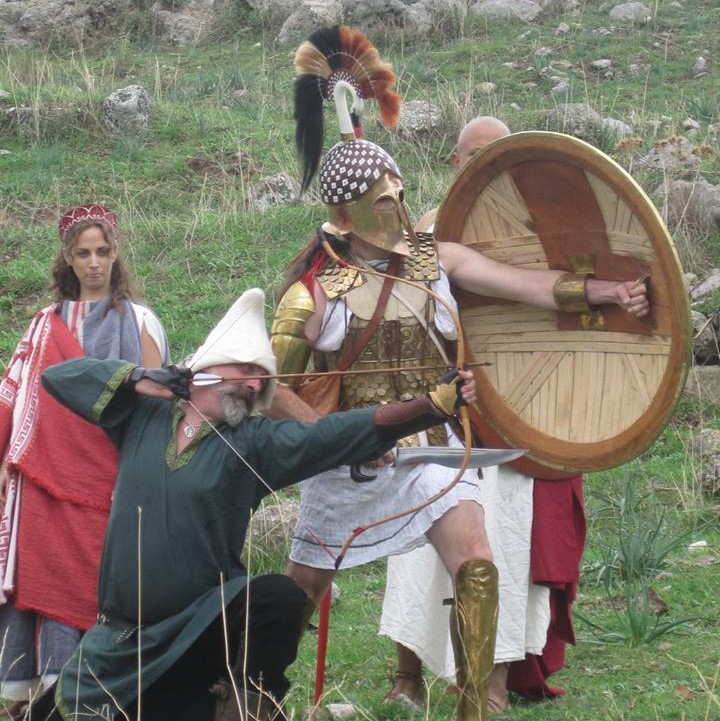

Lodovico di Medici, known as Giovanni delle Bande Nere
Everyone knows the trite, oft-repeated slogan. ‘War is Hell.’ And some know Lincoln’s comment, ‘Military glory–that attractive rainbow, that rises in showers of blood–that serpent’s eye, that charms to destroy… ‘ and we’ve all heard ‘Live by the sword, die by the sword.’ The human race and it’s penchant for violence has coined several thousand worthy slogans about war, death, destruction, and the pointlessness and folly of military adventure. There’s a host of good quotes here if you want to read for several hours. I particularly enjoyed Benjamin Franklin’s quotes, but then, I always do.
But… I write in not one but two genres where violence tends to define story arc and serve as the anvil of character building. There are many reasons for this. I still find war fascinating, although it is the fascination of the serpent. I admire good military tactics and strategy, and abhor foolish ones. I spent time in the military, and I admire its virtues, which are many more than most civilians could credit. Nor are all soldiers and sailors crypto-fascists and extreme conservatives. Nor, in fact, are conservatives so bad. But hey, that’s another topic.
But war sucks. It especially sucks for the young, the non-combatants, and the poor. On the other hand, it is totally possible to enjoy war; I have several friends who do or did. Human beings are incredibly tough, and can learn to enjoy most things, if you treat them badly enough; or, looked at another way, meat eating is fun, if you are an apex predator, and I know a few, and their experience of war is not like that of a Syrian mother with five children trying to escape Daesh/ISIL or a French nun trying to avoid English archers in the 100 Year’s War or…shall I go on?
No. But I could. Refugees… napalm… mass crucifixions… the execution of prisoners… cholera… trenches… the unburied dead of last September… child soldiers (you don’t think those are new, do you?)
OK. Glad I have your attention. Because if you read my books, you enjoy reading about war. That’s a bit of a shocking statement to make, but I enjoy writing them… Wait, I have a point. What I’m getting to is that I can write about war in a way that tells some of the truth about war and still deals with important themes in the Western tradition like chivalry and honor and good leadership skills. Or I can write a sort of war-pornography where corpses litter the stage but they are all, basicly, zombies (even orcs have character and even motivation and can be quite likable), and affectless. That is, their deaths have no affect on you; the killing is fun, the result not worth discussing.
I think that would be wrong for two very different reasons,. The first is a moral reason. I believe I have a moral responsibility as a story teller (and as a veteran) to not romanticize war. (And I think that sometimes I do it anyway.) But more immediately to this blog, I feel it is bad writing. I think that giving your main characters charmed lives and affectless zombies to kill is cheating. It may be comfortable, or like a video game you like, but it lacks the emotional involvement and difficulty that makes writing really good and reading really… experiential. By which I mean, a valid experience.
According to Aristotle’s Poetics (which is the sort of cornerstone of Western ideas of story and so on) motivation creates character and character supports plot and plot supports story (creates and defines story. Yes, this is a broad brush…)) And yes, I really believe all this stuff… my father, the author Kenneth M. Cameron, taught me the Aristotelian hierarchy pretty much as soon as I learned to write. Aristotle made another observation of dramatic action; that action rests of creating feelings of pity or fear. I think he left some other feelings out, but I’ll merely nod at pity and fear and say that, if you are writing about war and violence, you probably should work to evoke pity and fear in your readers…
From the sublime to the nerdy… I’m a lifelong gamer, and I didn’t learn to play RPGs from my dad, but I did learn a lot about writing from being a GM. I’ll reduce it all to a sentence… unless the characters have a real fear of death, the game will never be worth the candle. You don’t have to kill many; it’s a careful game of numbers, and all ‘Dans ce pays-ci, il est bon de tuer de temps en temps un amiral pour encourager les autres – “In this country, it is wise to kill an admiral from time to time to encourage the others.” By the way, Voltaire said that of Admiral Byng, who was executed by Great Britain for failing to relieve Minorca. Shot on his own quarterdeck, I believe. Dead. No resurrection. For… failing to win.
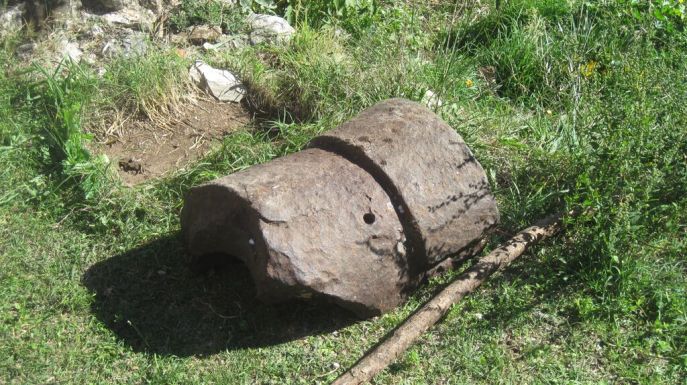
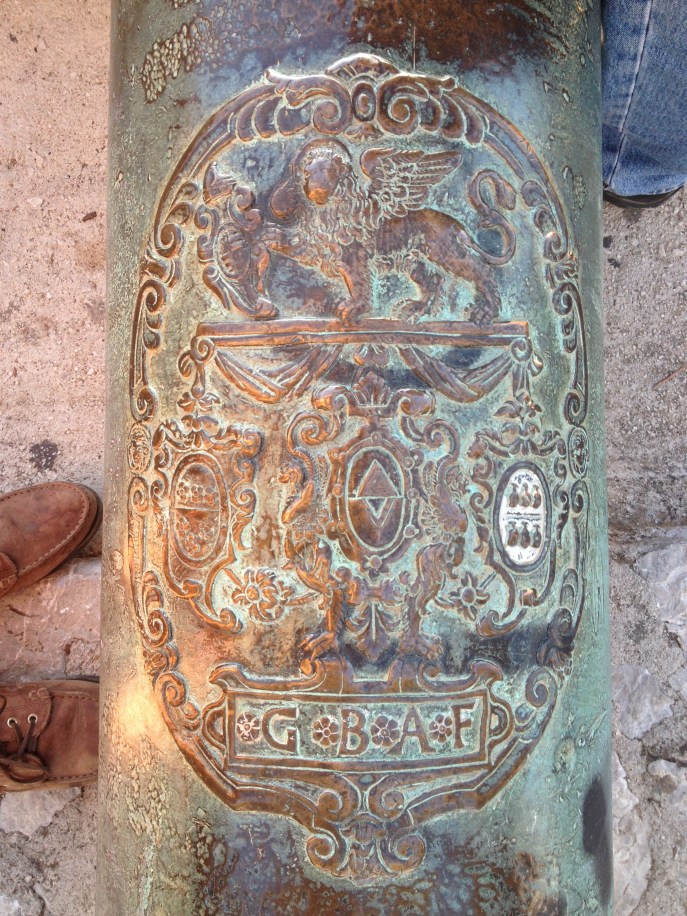
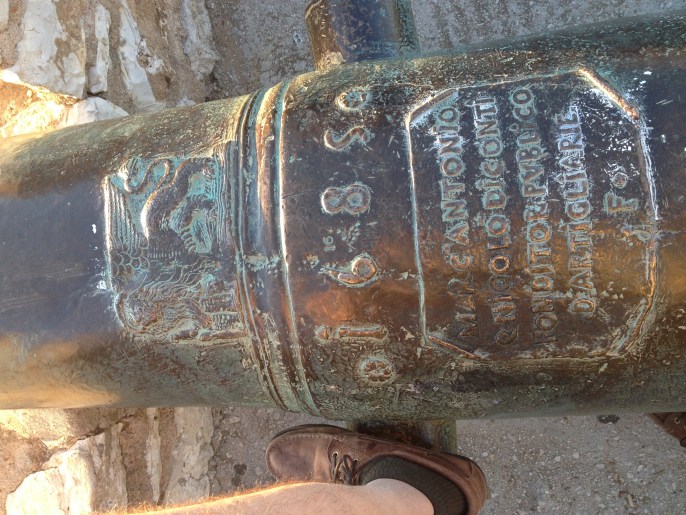
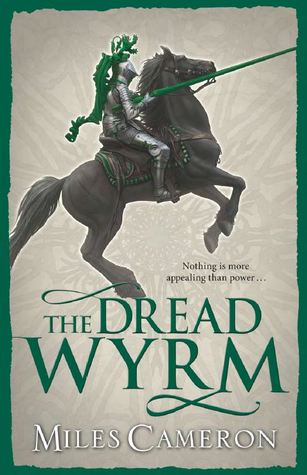
But I digress. My point, if there is one, is that for the readers experience of war to be valid, characters have to be threatened. And sometimes, favorite characters have to die. Sometimes they have death scenes (like Father Arnaud in Dread Wyrm) and sometimes they just die and you find out later (like Niceas in Storm of Arrows) or really deeply loved characters die in five words (like Jeremy in Washington and Caesar.) I think it’s just as trite to give every good (or fun, if evil) character a gallant death as to provide convenient zombies for killing or to have no death at all; if there’s one thing we know about war, it’s that it is no respecter of persons. Charles V is supposed to have asked ‘Was there ever an Emperor killed by a cannon ball?’ as if insinuating that God’s hand (or perhaps the novelist) was watching over him, but Constantine XI died at Constantinople (perhaps a cannon ball and perhaps not) and Charles III the Duke of Bourbon and commander of the Emperor’s armies ate a cannon ball at the attack on Rome.
In fact, heroism is not a suit of armor to protect the brave. The picture at the head of this article is that of Giovanni Delle Bande Nere, an Italian condottierre of the early 16th century and a promising candidate to unify Italy. He was everything a boy’s own hero ought to be (OK, in a grim/dark way…) a brilliant soldier, a superb swordsman, a lead-from-in-front officer. He loved his troops and they loved him; he took care of them better than most of his contemporaries, and in fact he was years ahead of his time in many, many innovations. He defeated the Chevalier Bayard in a Petit Guerre action. And he defeated the redoubtable Lansknecht leader Georg von Frundsburg. He was on his way…
Cannon ball. Age 28. No second life, no magic, no healers.
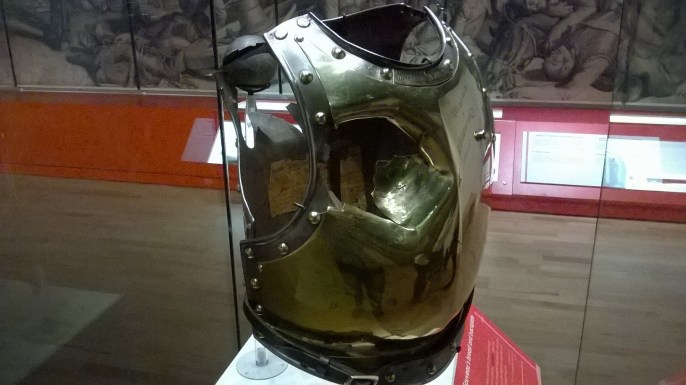
This is not his breastplate, but I’ll bet it was messy to clean this one.
Nelson. Charles XII of Sweden. Leonidas of Sparta. Wolfe at Quebec. Geoffrey de Charny at Poitiers. Herodotus is full of them.. his references to the hero of one battle almost always end with how that hero died in the next battle or the one after. Sir John Chandos died in action and so did about 1/3 of the great English and French knights whose names come down to us. Athenian polemarchs and Strategoi, Spartans, and Theban generals all died like flies in combat. Epaminondas comes to mind… Callimachus…
Zepata. Saul. Macbeth. Richard III. Demosthenes. Jim Bowie AND Davy Crockett. Tecumseh. Jeb Stuart. Marcus Claudius Marcellus.
These men were HEROES. Every one of them, despite some war crimes, the occasional rape or murder, and some ill-planned campaigns, was the very stuff of novels (actually, most of them are… literally).
They died.
And they don’t begin to be the tip of the iceberg of casualties in the lower ranks. Aides, officers, leaders of squadrons, colonels and centurions and taxiarchoi and knights. And squires, pages, legionaries, landsknechts, tribespeople, women (a huge proportion of war casualties, considering that they are supposedly ‘non-combatants’) children, slaves, dogs, horses… oh God, the horses.
Ernest Hemingway said:
They wrote in the old days that it is sweet and fitting to die for one’s country. But in modern war, there is nothing sweet nor fitting in your dying. You will die like a dog for no good reason.
I’d like to suggest that Hemingway was missing how much that had always been true. Most people die like dogs in war, for no reason.
So as long as I write about war and violence, characters will die. And, even worse, some will die ‘for no reason.’ I will build a character arc with motivation and great stuff and then…
…cannon ball. Or dysentery. Or childbirth. (The greatest historian of Chivalry IMHO, Maurice Keen, suggests that if we had accurate numbers we’d find that it was more dangerous to be a well-born 16 year old aristocratic woman in the Middle Ages than to be a knight.) I don’t do it to be mean, or because I’ve run out of things to say.
War kills. People die, and seldom for reasons we understand or appreciate.
Good fiction has to at least resemble reality.
![IMG_3569[1]](https://1phokion.com/wp-content/uploads/2016/01/img_35691.jpg?w=687)












 With Pen and Sword