Wargaming and writing (and a bit of a battle report)

Standard
a big Impetus battle.  the report is below, or you can skip to the end for the writing advice.

a big Impetus battle. the report is below, or you can skip to the end for the writing advice.

I spent last weekend in the United States, visiting friends from university and from my military career.  And yes (nerdy spoiler) I’m an inveterate gamer as well as a sword nerd and a reading nerd and a history nerd.  I play them all–fantasy role-plying games (RPGs hereafter) and historical RPGs and sci-fi games with 40,000 bits of plastic and resin and…

Never mind.  Your eyes have no doubt glazed over.  But I’m here to demonstrate that gaming can help your writing–and that writing is a lot like gaming.

I’ll also note that I have some slight familiarity with various massive online games, most especially Eve, in which a few of my local friends are fairly huge, and Rome Total War, for which I get screen shots and battle reports from several friends, and so on.  I confess I don’t PLAY any of them.  See, it’s like this.  I’m self-employed.  I write these books for a living…  and if I got addicted–and sorry, friends, but that’s what it looks like to an outsider–to one of these awesome dream machines, I’d never write again, now would I?

That's me, with author Matt Heppe

That’s me, with author Matt Heppe

So… on arriving in Philadelphia, I got to play AD+D (the current edition) with a mixed party of old, old friends (including two players from the original Alba Campaign that gave birth to the Red Knight) and some new, very able players from my friend Matt’s group.  Matt Heppe is a self-published fantasy writer with a great blog and two solid novels.  I read and enjoy his work, and I recommend ‘Eternal Knight’ to you, as well.

But, I confess, even better than reading a book is getting to be IN it.  Isn’t this why we, the nerdy, started RPGs to begin with?  We read Tolkien and E.R. Eddison and we said ‘I want to be In that world.’  The possibility of immersion in an adventure is the guiding principle behind–well, behind Space Opera, Historical fiction, Epic Fantasy, and all RPGs and most wargames, too.

So–I got to spend an evening INSIDE Matt’s Eternal Knight world.  Brilliant.  Fantastic.  I’m told I acted just like Tom Swan.  Secret?  Tom Swan is really me.  WIlliam Gold and Kineas and Arimnestos are all other people, but Tom Swan… anyway…

The great man at work.  Revenants?  Really?  Everyone else seems so calm...

The great man at work. Revenants? Really? Everyone else seems so calm…

It was complicated, devious, included a general air of political betrayal, and in the end we rescued an absolutely ungrateful sorceress.  What could be better than that?

And how does that effect writing?

Years ago, I had a chance to play–for more than a year–in another well-known author’s RPG.  In this case, their was no particular system, and the DM was none other than Celia Friedman. 

When the Gerald Tarrant books started to come out, I saw a few characters I recognized, including the priest played by my friend Joe, without a doubt the best role-player I have ever met.  But the action was different and I wondered what had happened to all our good dice rolls and brilliant daring do.  Well–it seemed brilliant at the time.

Years later, as the author of 20 or so books, I know.  RPGs are useful tools for a writer–first and foremost, because the madcap/annoying players leap out of the funnel and go off and do their own thing instead of following a plot, you do learn to re-plot instantly.  This may be the single best thing any author can learn–it sure saves time, and it does, after some practice, allow you to write characters who really have their own motivations–because players do.  They do not obey.  Even if they like the plot and they want to complete it, they will try to bend it to their own ends, the devils.

And that’s good, because in real life, there is no ‘plot.’  You can plot to kill Hitler, or plot the fall of an empire, but most people–even adventurous people in real life, like Giovanni Di Medici lead lives that virtually defy plot, wandering madly off in all directions in pursuit of three goals at once.  Like–well, like people.  Like trying to put a roof on your house, pay down your mortgage and get a vacation for your wife all at once.  Eh?  Normal life, but in some books, each character only tries to do one of those things and that action defines them.

Playing role playing games, and running them, can break you of this very quickly, because the experience of building adventures wherein seven people each have a vast host of wants and desires is incredibly educational.  And they will push you to make sure that the antagonist (s) have the same level of complexity.  We are not talking about busting dungeon doors and hacking stuff, here.  We’re talking about state building with child soldiers (evil), large scale slavery (evil) trying to get money by theft and violence (well, in some adventures this is laudable.  Francis Drake and Bilbo Baggins come to mind).

But the adventures themselves, as they come out, are almost un-readable–because the welter of confusion, mixed motivations and sheer luck does not make a great read.  I’ve read a few.  You have to pick and choose among the best moments of a long campaign–and whittle the motivations, the confusion, and luck–all down to a dull roar.

But… I learned a ton about writing from that game.  I’m going to guess that Matt Heppe and Celia Friedman did too.

That was Saturday.  On Sunday, I went across Philadelphia to Landsdowne, where I played in a gigantic Renaissance historical battle with thousands of small metal and plastic miniatures.

Steve Callahan, master wargamer.

Steve Callahan, master wargamer.

This game was run by Steve Callahan, one of my oldest friends, and he had put together a scenario that really owed a great deal to the role playing world–as most really good gaming scenarios do.  We’d all painted just for this battle, so I arrived with a small force to represent the great 16th century condottierre Giovanni Dei Medici (see above) and my friend Bob Sulentic played Charles de Lannoy, generalissimo of the Holy Roman Emperor Charles V, while Steve Callahan, the scenario designer, played the reckless and chivalrous Francis I of France.

Robert Sulentic, playing Charles de Lannoy -- Bourbon and all the rest.

Robert Sulentic, playing Charles de Lannoy — Bourbon and all the rest.

In the scenario (this is the battle report, skip it if you like and go to the end about writing) which we called ‘Not Pavia’ because it was like, but not just like, the great Battle of Pavia we (my Italian mercenaries) had to hold a newly created siege line or at least retreat carefully in the face of a massive surprise attack by the Spanish and Imperialists.
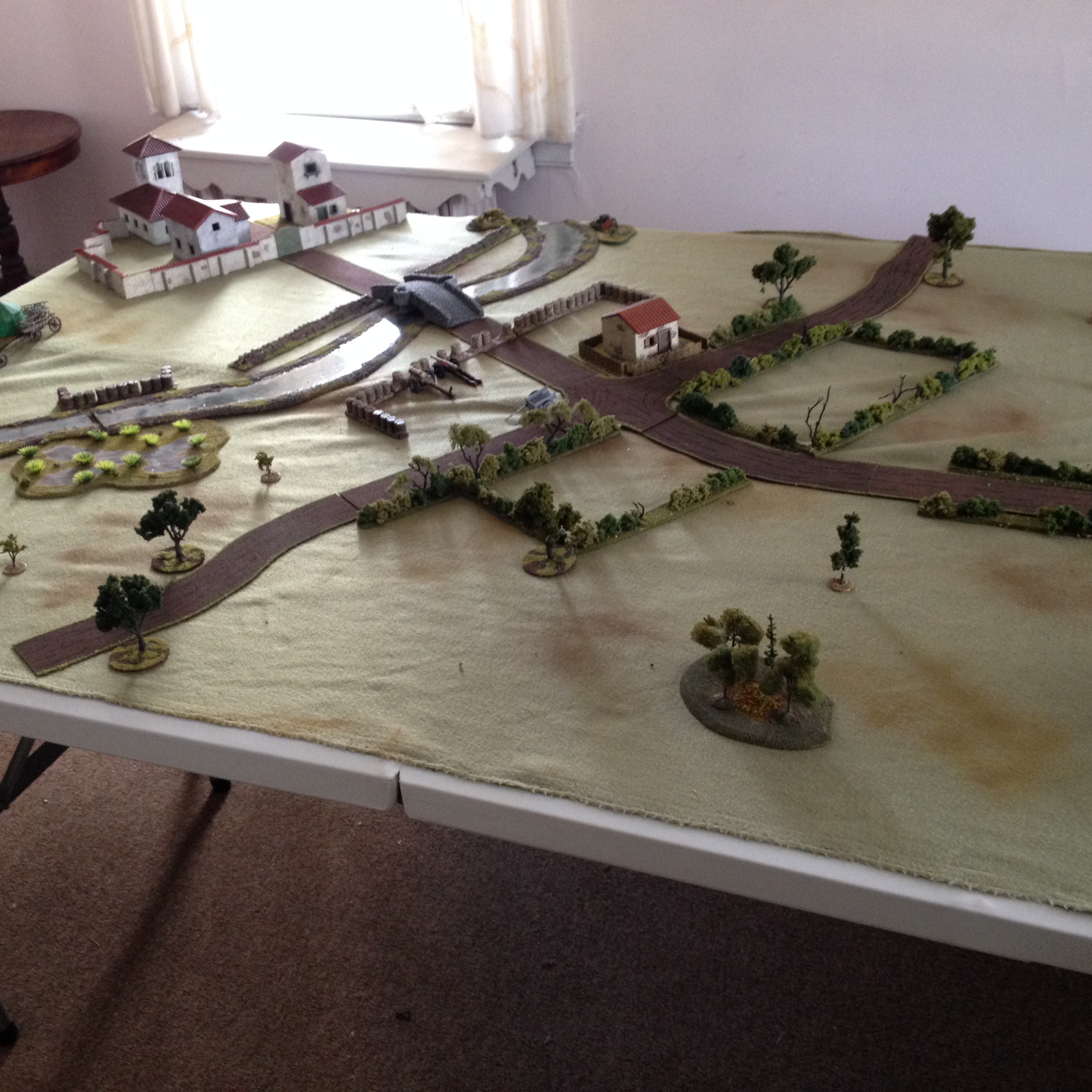
The battlefield, with the towers of Pavia in the distance.  Or maybe Ravenna...

The battlefield, with the towers of Pavia in the distance. Or maybe Ravenna…

initial dispositions.  Giovanni and the Black Bands are in the hedgerows with a cavalry reserve.

initial dispositions. Giovanni and the Black Bands are in the hedgerows with a cavalry reserve.

The game began with a master-stroke–Bob/De Lannoy rolled a 12 and both improved his commander and got his force flanking march onto the table immediately.  I think that all three of us thought this stroke guaranteed Bob a decisive victory–Francis I hadn’t even appeared on the table, and there was no relief in sight for my handful of faithful mercenaries.

Giovanni's view of the battlefield.

Giovanni’s view of the battlefield.

But–despite Bourbon’s early arrival, the Imperialist attack was slow.  The Italian positions were protected by a river and three layers of hedges, and a small town, and each of these held the Imperialists for a little while.  One of the French divisions started on table with the Italians–all skirmishers and mounted arquebusiers–and they held an enormous Spanish column at a ford while the Italians bore the brunt of the fighting in the hedges.

This felt very authentic.  The Imperialists hopes of a smashing blow were frustrated, not defeated.  They carried the trench lines under construction, but bogged in the hedges, where an Imperial general was killed by the Bande Nere’s harquebus fire and two units of Imperialist infantry destroyed.

Then King Francis arrived.  Steve played him brilliantly, which was to say, he advanced at an incredibly impetuous rush the full length of a ten foot table in four turns and hurled himself on the first enemy unit he encountered.  Do to poor dice and his own impetuosity, it took him two turns to cut his way through some Spanish musketeers.  The Spanish pike men lowered their pikes and charged…

But it was Bourbon’s early advance on the left that was the instrument of its army’s own doom.  Moving as rapidly as possible in the face of Dei Medici’s crack cavalry (and the only unit of Englishmen in the Italian Wars–Sir Richard Jarnigan’s demi-lances, and that’s a novel I hope to get to write) the Imperialist left began to lose units to attrition, heavy fire, and finally, perhaps the luckiest cavalry charge I’ve ever delivered.

Bourbon's infantry and the Black Bands.  There's Giovanni in person, center right.

Bourbon’s infantry and the Black Bands. There’s Giovanni in person, center right.  Upper right, Jarnigan’s English lances smash through all the skirmishers and some Imperial knights as well.  Big dice.

The result was that Bourbon’s infantry, which had never faced a foe and advanced as fast as it could was suddenly stripped of all support, and found itself surrounded by a tired, but jubilant, set of Black Bands.  The Italians fired again…

The Imperialist pikes charged a disordered and somewhat beaten up French King.  Since his death or capture would be instant disaster for our army, I watched with what I hope was equanimity as Steve Callahan, who cannot usually roll dice to save his life, out-rolled Bob Sulentic.  It was an amazing display of sheer luck–11 dice to six, and Steve managed a draw.

Francis stopped the Imperialist pikes cold–just as Dei Medici completed the encirclement of Bourbon.

Night fell in time to allow the Imperialists to withdraw without a disaster.  But unlike in the real world, their attempt to break the siege had failed, and they’d incurred severe losses.  Francis I was not captured, and Dei Medici lived (in the real battle, he’d been mortally wounded a few days before.)  I found this interesting, as Francis I said after he was captured that if Dei Medici had been present, it would have been an whole other battle.

Oh–some details.  Miniatures are by a whole variety of makers, but we all love Foundry, Perry, and TAG (The Assault Group).  But there are miniatures on that table from our first games in 1982!  Ral Partha and Hinchcliffe landsknechts…

This was our first outing with the Italian rules called Impetus, and I rate them at five stars.  This is not a rules review, but I’ll suffice to say the mechanics are very elegant, the playability is remarkable, the mistakes we made were easily repaired the next time (all the shooting was too heavy because we missed a line) and best of all it felt authentic and interesting from command to appearance.  I particularly like that every unit is a complete base.  But I love to paint and build little scenes and this rules set seems to know that.

End Battle Report.

So… writing and wargaming?

Well–I’d love to give wargames like this an unqualified push, but that’s not what I really think.  I really think it is a case of ‘garbage in, garbage out.’

A renaissance condottiere, when asked what three things made for the best army, replied, ‘first, money, second, money, and third, more money.’

Cicero, who knew a thing or two, said ‘the sinews of war are infinite money.’

The truth is that war-games tend to minimize the things that actually drive military success–like money, good logistics, a night’s sleep, clean drinking water and better foragers and recent pay–and replace them with arid concepts like ‘morale’ and ‘attack value’ that is often dependent on ‘weapons factors.’ All of which are often–wrong.  Or opinions.

Perhaps most damnable of all for the author, the victory conditions are clearly stated and there are rules.  Now, my experience of real war is pretty limited, but I was in the first Gulf War and in a regional ‘conflict’ in Central Africa as a sort of armed observer, and I’d like to note that in my experience the only rules are those you make and keep for yourself, and no one ever can tell you what the victory conditions are.  In fact–with no offense to many professional soldiers I know–one of the worst things about having access to the command and control level ( I was a kind of intelligence officer and had pretty wide access) is the understanding–if you study military history–that the people running your forces have no real notion of what victory might look like.  That, in fact, they are as blinkered today by their own expectations and the foolish demands of their political superiors as the generals of the past were limited by the horizon and the powder smoke. (Doubt me?  Tell me how we plan to defeat ISIS.  Don’t mention nukes.)

That’s another thing missing in games–the endless fog.  Real war?  You make decisions on no sleep, little food, and in a constant state of low-grade fear.  Maybe a little diarrhea, just for fun.  Wargame?  You drink a beer and your greatest fear is the outright humiliation that your dice will turn and your pretend metal general will be ‘killed.’  And maybe you’ll have to pay for dinner. Everything is confused, and even in the modern world very few people can tell the decision makers exactly what is really happening.  Wargame?  You can see it all, laid out in nice paint and realistic scenery.

But…

But I learned a lot about war from these games.  I merely insist that as writers, we have to know what we cannot know, if you’ll pardon the phrase.  I learned how to read terrain.  I can now find a defensible position in a single glance in fairly dense woods.  I can read farm fields like a living geo-map, and so can almost anyone whose ever been a ‘combat infantryman’ probably better than me, but I learned a lot of that from deer hunting and more–much more–from playing games.  Reading terrain–the coup d’oeil of the past–was, and is, an invaluable skill in war.

Wargames can also make you understand how to read a battle, if you understand that the process is less like ‘being there’ with Marilyn Monroe and more like dissecting her corpse. Wargame Gettysburg with ten friends on a weekend, and you’ll know that battle like the back of your hand–and, as an author, you’ll really get a feel for it as a narrative.  That’s forensic (hey, hence my clever comment on the corpse, eh?) but it works.  Often, it works as well or better than visiting the battlefield and walking over it.  Since I can’t get to Jaxartes River or every other battlefield I write about (I do visit as many as I can–I know, it’s a terrible job but someone has to) I need this forensic method of approximating experience.  And you see very well what it means to have the commander in the right place at the right time–you see how important that was.  Of course, when your commander isn’t hovering over the battlefield, how the heck does he know what’s important?  That’s in all my books, but that’s another topic…

But what made the game we just played magnificent–and what made the game Matt ran magnificent–was the work THEY put into it–the prep work.  Hence the GIGO principle in action.  We cannot assume all games–RPGs, Rome Total War or games in Steve’s parlour–are always so well prepared.  Some, frankly, are war porn–nothing but pretty uniforms and a vague belief that one nation or another was ‘better.’ Crap, says I.  That’s the lowest form of pseudo-fascism.  If a wargame is going to teach you anything (like reenacting, actually) you have to work to make all the details authentic, to make the mechanisms transparent, and limit the false assumptions.  You have to test ideas.  Many wargames assume that the Roman Pilum was a sort of magic weapon, and had devastating effect. Care to test that?  ‘Everyone’ knows that the British line was better than the French column.  Right?  Stupid French.

No.  I won’t synopsize Brent Nosworthy’s Anatomy of Victory or all of C. Duffy, but I’ll say that all these statements are pretty banal, and often palpably false, and games based on them are equally false, and that makes building a simulation on lead soldiers and dice–well–difficult.

But Steve did it and so did Matt.  it takes time, expertise, imagination…heck, it’s a lot like writing a good novel…

…wait, that was a circular argument….

Clothes Make the Character (Or why everyone in the Traitor Son series has to have a wardrobe)

Standard
My daughter, in her silk and fur, between Giulia Grigoli of Verona. Italy and xxxxxx who made Giulia's dress and her own.

My daughter, in her silk and fur, between Giulia Grigoli of Verona. Italy and Margherita De Marco.  I believe both her dress and Giulia’s were made by Monica of Sartoria Monro.  Beatrice’s dress by me.

 Margherita De Marco

Yes, it’s true—I have closets full of historical clothes. In fact, not only do I have closets full, but so do my wife and daughter—clothes for at least three time periods (besides our own, of course) and sometimes four. Or five.
Nor are these clothes, strictly speaking, costumes. To me, a costume is something that looks real but is not—the most extreme, and perhaps wonderful, example I ever saw was a staging of Shakespeare’s ‘Midsummer Night’s Dream’ where all the elaborate Elizabethan fashions were dome in garbage bags, duct tape and glue. They looked fantastic, I promise you—and they wouldn’t have allowed you to light a camp fire or walk in the woods or ride a horse or, really, experience any part of the past, including the experience of what it might be like to wear those clothes.
And it is in the word experience that I want to couch my arguments about clothes and character. You do not have to be a gender studies professional or a mere (that was ironic) costumer to understand that clothes do a great deal to define and project our gender, our status, our role in society and, oh, our individuality or lack thereof, our taste and fashion—they are like a signboard of who we are.
So when I write, one of my very first questions, once I’ve considered character and motivation of a ‘person’ in my fiction, is ‘what does she wear?’
Probably worth noting here that I love to sew. And that every time period has its own conventions, its own stitch styles and buttonholes and eyelets and so on—its own notions of how to stiffen and when to leave soft, what to stretch and what to make rigid, what to emphasize and what to flatten. In fact—and I can’t emphasize this too much—what people wear is very much like how people fight. It has a little to do with practicality and a great deal more to do with social needs and cultural norms, and thus, each set of clothes for each character helps me define what the culture is like, and what the clothes say, and what the culture allows those clothes to day.

Laying out a medieval sleeve.  Cat optional.  In fact, completely UNNECESSARY

Laying out a medieval sleeve. Cat optional. In fact, completely UNNECESSARY

I find it interesting when my work is called ‘Historical Fantasy.’ To my mind, and with due apologies to outraged readers, all fantasy is historical; every single fantasy novel I have ever read makes assumptions about culture, costume, gender, military culture, farming, industry and economics, religion and even magic that are strongly embedded in history. This should surprise no one—history is the story of the human race, it is almost impossible to imagine an entire culture that is truly alien to us—and that can be made to function organically and make sense to the reader. We begin confronting this ‘reality of fantasy’ as soon as we discuss clothes. What are they made of? If I say wool, I have to wonder where wool comes from; sheep, obviously, but raised how? And where? Sheep had an enormous impact of the European Middle Ages; sheep also had impact on the Mongols, in a different way. Wool is important to the economy of Alba, in the Traitor Son series—so important, I might add, the wars can be fought over wool production, and merchant adventurers like Ser Gerald Random base their finances on the regular income from wool, which the King bases his fortune on the taxation of wool exports.
Wait, wasn’t this blog about fashion?
Say silk—and then wonder where it comes from. Are there mulberry trees? Are their silk farms? Is there a China?
Even if we leave ‘historical’ fantasy (and so far all that’s making it historical is economic and cultural linkage to fabric, for heaven’s sake) we aren’t safe. Invent fantastical spiders that spin miracle fibers, and you have to ask, if these things interest you—what’s the infrastructure of that like? Where do the spiders live? Is there a magical spider equivalent of the mulberry bush? Are the spiders killed to harvest the fiber? Is this a child-labour culture?
How about furs? In most pre-modern societies, furs were a reliable indicator of status; sumptuary laws in many European countries tried to regulate who wore which one (although new research indicates this was less to limit the lower classes and more to make sure people bought local and not ‘foreign’ fur.) Furs—and leather quality—influence everything from armour construction to how a hero or heroine might dress; who does not love the ‘simple leather jerkin’ of the generic European past? (I challenge you to make one and then tell me it is ‘simple.’)
One of the most remarkable books I read last year was ‘The English Fur Trade in the Later Middle Ages’ by Elspeth Veale. In a single book Ms. Veale showed me the depths of my ignorance about the internationality of the fur trade in the Middle Ages—and also showed me how all the infrastructure for the New World trade in beaver pelts had already been created long before Columbus sailed. She also effected the economy of my fantasy world.  Who knew how much money people spent on furs?
Just before I read the book, I was in Cumbria with my wife Sarah and her sister Nancy Watt (both veteran reenactors and in the case of my sister-in-law, a deeply gifted seamstress and historical costumer) when we visited the site of a seventeenth century tannery.
Like Elspeth Veale’s book, that one historical site did a great deal to cure my ignorance (and I’ve worked with leather since I was a child). Did you know that dog shit (sorry, but I wanted the impact of the word) was an essential element in tanning? That carts would cruise from kennel to kennel, collecting it? Mmmm… picture a job where you literally wade in dog shit and dead animal bits. Oh, and walnut hulls in acid. Wow, this is pollution of an almost modern toxicity, and it did a great deal to enlighten me on the glorious life of the countryside, or even why tanner’s yards were so horrible and always located in the very worst parts of town. Sometimes alongside brothels.
So there’s a very general look at some of the materials that go into clothes and how much they influence society, and the attendant cultural baggage. But then there’s cut.
(Warning, generalization!) Until at least the late 13th century, Europeans wore very loose fitting clothing, often fitted to the waist with a cord or belt. After the early fourteenth century, clothing got ever tighter, until by the 1380s, court-culture clothes were nearly skin tight. It would be easy, if you didn’t make and wear these clothes, to characterize the earlier clothes (and peasant clothes) as ‘practical’ while the court fashions were ‘difficult to wear’ and ‘constricting’ and ‘uncomfortable.’ This is where we begin to examine the interactions between culture and fashion; a lifetime could be spent on it, and I only wish you, the reader, to see how complex the inter-relations are. And why ‘experience’ is important to making judgements.
You see, those tight clothes—at least some of them—were influenced by changes in armour; and they were skin tight to make the new ‘plate armour’ fit better. And in fact, at least in men’s fashion, this led to a sort of reinforcement loop, wherein clothes were made to look more like the armour and armour began to be made to look more like the clothes—all because armourers could suddenly imitate complex curves. And those tight clothes are extremely comfortable. Also very difficult to make, and thus require a professional tailor or pourpoint maker and not your wife or mother—thus marking the wearer of the tight fashions as completely distinct from a farm worker, an apprentice, or a monk.
As tailoring improved, women’s clothes grew tighter, too. Was this a side-effect of the sexual revolution after the Black Plague? Does that mean that if my world of Alba hasn’t had a plague, clothes should not be tight? Or was it a side-effect of Thomas Aquinas’s suggestions in the late 13th century that perhaps it was not a sin for men and women to dress to appeal to each other? Clothes are related to Theology? Well, Of course—ask your Islamic friends.

Pablo Payam, by Dmitry Bondarenko

Pablo Payam, by Dmitry Bondarenko

Pablo Payam (pictured above–say, you did know that the UK edition has drawings of all the major characters, right?) wears very different clothes from Gabriel Muriens—not just because his culture is different, but even for a few practical reasons.
Who is Pablo Payam? He’s a character in book 3 of the Traitor Son series who you haven’t met yet unless you have read these free short stories…
As a writer, I have discovered that the more I know about fashion, the less room I have to mix and match. It was Celia Friedman (I’m a huge fan of her work, and BTW she ran a superb role playing campaign in which I got to play as an impressionable youth…and she’s a costumer) who pointed out to me a number of the truisms of loose and tight, long and short, and suggested to me that the rate of change in fashion is fairly constant—that fashions changed as rapidly in 15th century Italy as they do in modern Italy, for example. And that, since every fashion represents a departure in taste and cut, often in technologies like weaving or tailoring or construction, it can be very false to take what you like from three different eras and countries to ‘invent’ a new ‘look.’ It’s all there for a reason.
And finally (SPOILER) a word about Blanche Gold. Blanche is a minor character in book 2 (Fell Sword) and a major character in Book 3 (Tournament of Fools or something like that). Blanche is a Royal Laundress to the court of the King in Harndon. I wanted to have characters who were not nobles or great merchants or mages or scholars; I wanted, if nothing else, to show the impact of ‘great events’ on the kind of people most of us are in real life—people largely unable to effect major change with our swords or our special powers, just trying to get along and perhaps ‘have a life.’ Blanche has a fairly complex and unexpected future ahead of her. But let’s talk costume.
First, Blanche, as a servant of a great family, is clean. Her cleanliness is an advertisement of her skills—and in fact, when I write her character’s POV in Book 3, she spends a fair amount of time avoiding getting dirt—and blood—on her hands or her clothes. And cleanliness is part of fashion—a part that is very difficult for those not born to the upper classes. Let me just add that this is another area where the experience of reenacting aids writing. It is not that the past was so very dirty—it is that, when you live, for example, in an army camp, the opportunities to wash your hands in warm, soapy water are few and far between, and the effort and discipline required to make that fire, boil that water, buy soap and use it are almost as great as the discipline required to stay clean in the first place.
But Blanche—who is young, attractive, and in the direct employ of the Queen, Desiderata—the very embodiment of Medieval loveliness, grace, and a kind of empowerment (and fashion) has to dress the part. Blanche, and any other servant of the Queen, would represent her to the world—when shopping, for instance; when working, when going about a big city like Harndon. Servants—and noble retainers—in the Middle Ages wore liveries—some quite amazingly colourful—and Blanche is often in livery. Her clothes are a little more practical then the queen’s, but probably modeled on them in simpler, cheaper fabrics. Blanche, as a laundress and fine-sewer (a woman who can sew very well, which is different, of course, from patterning or tailoring and cutting cloth) would probably embellish her clothing with embroidery, an advertisement of her kills. She would resent anyone who damaged her clothing—she might be quite adept at avoiding them…. And that thought, in fact, gave birth to a scene…

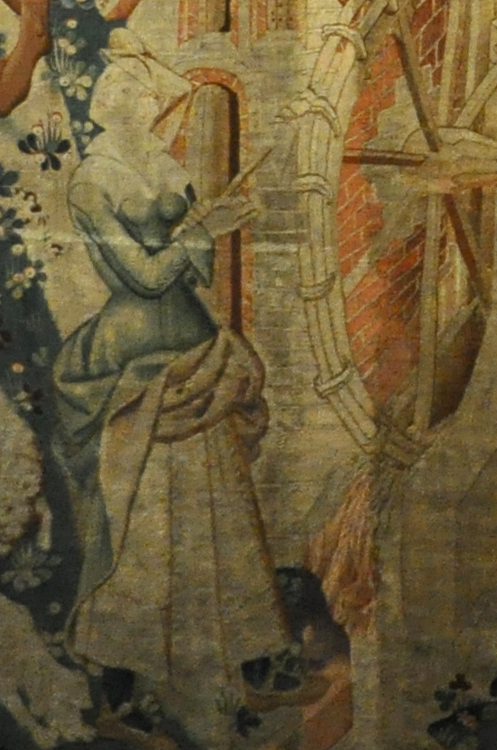
Miller's Wife, about 1430.  To me, this is very much how Blanche might dress--except in livery, most days.

Miller’s Wife, about 1430. To me, this is very much how Blanche might dress–except in livery, most days.

This image—the Miller’s wife from the Tapestry ‘Falconry’ in the Devonshire Tapestries in the V+A—is Blanche, to me. Her neat, modest, but attractive clothes are not as extravagant or expensive as those of the great ladies around her, and yet, she seems to hold her own.
So does Blanche. You’ll see. She’s not just a pretty face.

Next blog, we’ll talk magic.  That is, how I evolved a magic system, and the history of all the stuff I ‘invented.’  Hah.

The Siege of Belgrade 1456, or why is history so complicated?

Standard
17

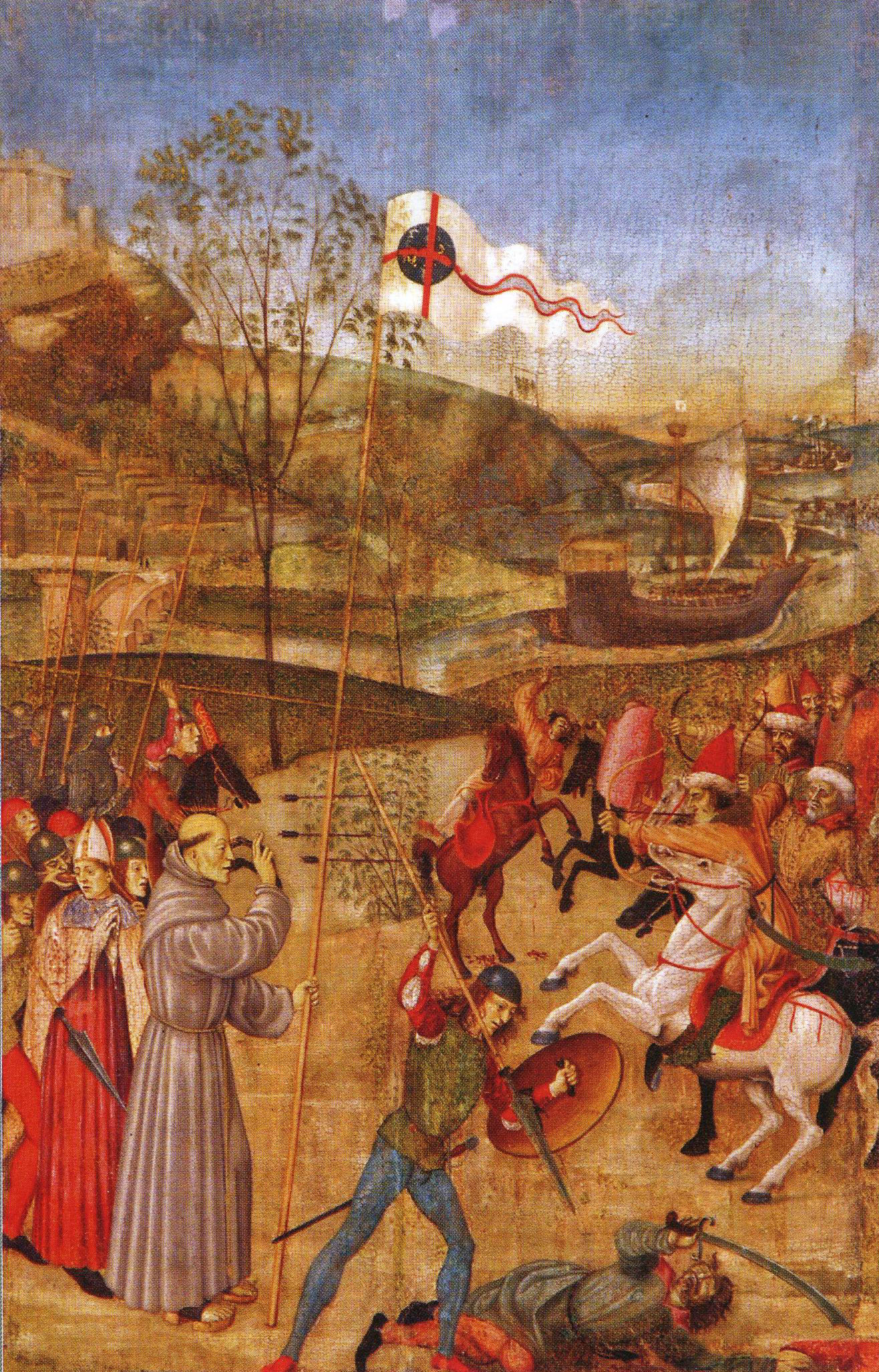
Fra Giovanni di Capistrano preaches while a nicely uniformed Italian infantryman with a very Manciolino-like partisan and rotella dispatches a fallen Turk. 15th century. Note the ship in the background.

This week, I’m writing the last pages of the last installment do ‘Tom Swan and the Siege of Belgrade.’  It is, I think, some of my best writing; by including a major female character who is, to put it nicely, a ‘woman of the army,’ I’ve taken an opportunity to give a voice to the life of common women in the period; and as usual with Tom, there’s some good history, some fun, and some fighting.  In this case, a foray into boat-building, too.

But the pivotal moments of the siege are still, at this 11th hour of writing, giving me serious trouble.

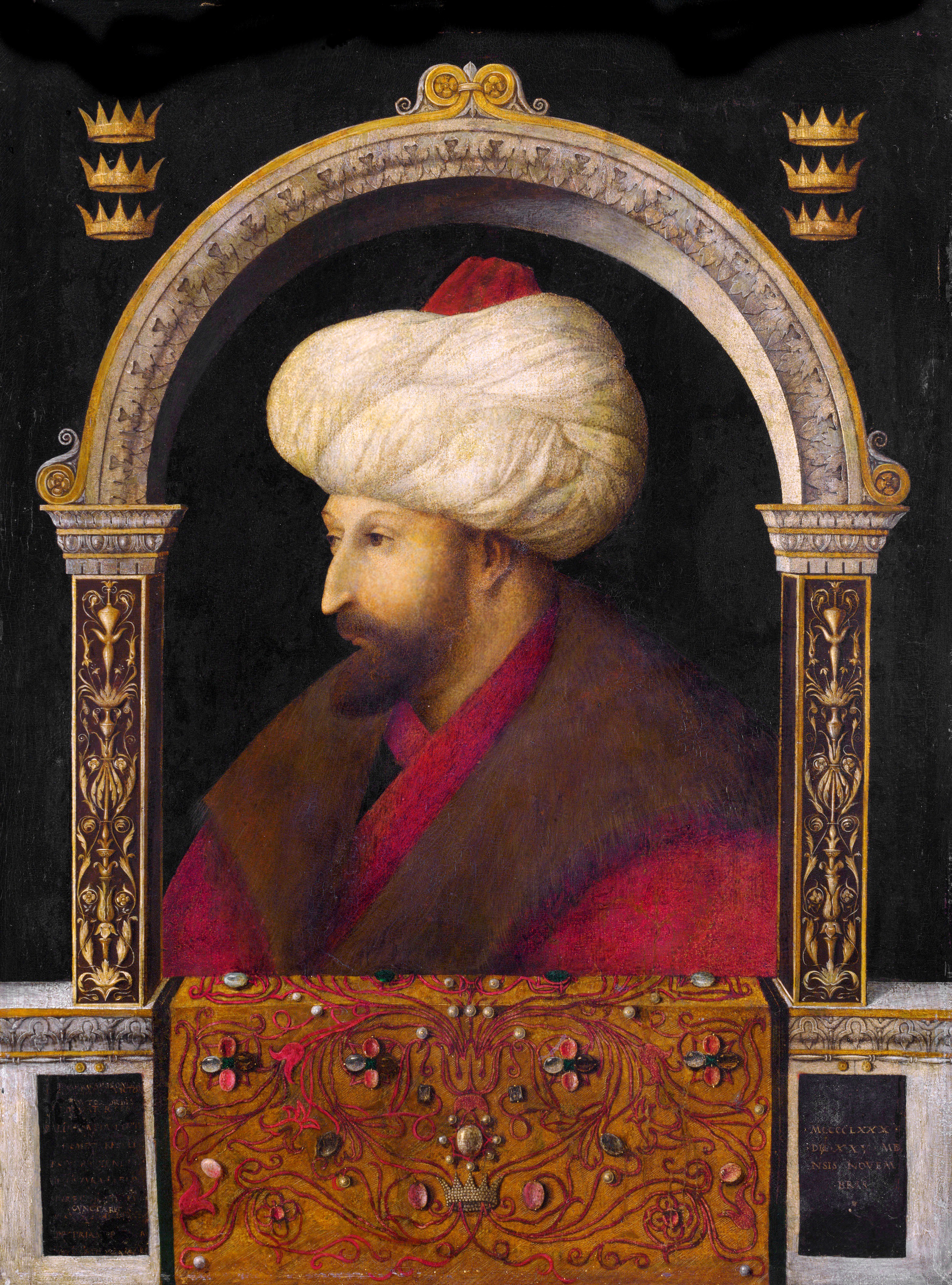
Bellini's portrait of Mehmet II.  One of the best things about writing this period is the quality of contemporary images.

Bellini’s portrait of Mehmet II. One of the best things about writing this period is the quality of contemporary images.

In mid July of 1456, Sultan Mehmet II and a great army of the Ottoman empire laid siege to the Fortress and city of Belgrade, in what was then Hungary (even saying that is a simplification).  By late July, his siege had failed and he’d been defeated in a great battle–probably the most significant military defeat of Mehmet’s reign, and the first glimmer of hope in the West after the fall of Constantinople to the Turks.

So… that’s about as much as can be said, in terms of pure fact.  Today’s blog is an exploration–for historical fiction readers and writers–of the boundaries between history and fiction, and of the sources and perils of research.

Let’s just begin with a timeline of the siege.  Without opening a book (using internet sources) you can find at least four timelines for the siege.  Most of them share some commonality; all agree that the Sultan first arrived with his advance guard–which may or may not have fought an action with Janos Hunyadi (the Hungarian ‘great captain’ and last best hope of ‘Christendom’ at least according to some) to the east of the city.  Later, Mehmet II set up his guns and began the bombardment.  His navy–a river navy–came up the Danube at some point, and joined the siege.  Then Hunyadi’s navy scored a ‘miraculous victory,’ breaking the Ottoman’s chain (was that a physical chain like the Knights of Saint John used at Malta?  Or merely a metaphorical chain of ships?).  Later still–probably around the 20th of July–Mehmet ordered a general assault, which seemed to succeed and then was bloodily repulsed.  Finally, a day–or two–later, the Hungarians counter-attacked.  They may have been led by the bloody-minded Dominican Giovanni da Capistrano.  Or not.  He may in fact have been the actual commander of the ‘Crusaders.’  Or perhaps a figurehead.  Or perhaps, he played almost no role at all.  That’s another story.

In fact, the very importance of the victory has overshadowed and mythologized the events.  Both Hunyadi and Capistrano wrote letters after the battles, claiming full credit for themselves.  Catholics–and popes–liked to emphasize the role of Capistrano–first, because it showed that the victory came from God; second, and perhaps a little more nefarious, it allowed the popes and western rulers to ignore their own complete apathy in the face of the Ottoman invasion.  (Does this sound modern?)

But likewise, it has been very tempting for generations of Hungarian and Serbian historians to mythologize Hunyadi and his efforts.  And, in wanting to claim the victory for a nationalist agenda and deny any role to the German crusaders and Capistrano, eastern European historians may also have been culpable.  Communism emphasized the role of the peasant crusaders–a people’s war.  And so on.

Once you leave the internet for scholarly sources, the situation only grows in complexity.,  The failure of the King of Hungary and the Emperor to provide any meaningful support to the crusade turns out to be understandable in modern terms–Hunyadi, it appears, was a typical Renaissance warlord/tyrant, and a major victory by him would, it was thought, undermine the stability of the Hungarian crown and perhaps even of the Empire itself.  Both the King of Hungary and the Emperor preferred to have the Ottomans as neighbors than Hunyadi as warlord.  Again, it is easy to paint Hunyadi as either the villain of the piece or the hero.  And lest we think the Emperor and King to be fools–in the immediate aftermath of the glorious victory, Hunyadi died–and his son Mattias ended, after the dust settled, as King of Hungary.  See?

And once you begin to examine the role of Vlad Tepes, the original Dracula–all hope of dispassion goes flying out the window, and the reader/researcher/writer is locked in a struggle between myth and prejudice.  I’ll leave Vlad for another day.

Instead, I’ll resolve the lens of research down to a few issues–again, I hope to entertain and maybe help the reader on how this process works–for the writer.

I decided to emphasize the naval battle.  First, my main character has considerable experience at ‘sea’ and second, as a London-born man, he understand river boats and cargoes.  I confess that as a former Navy man, I like sea fights.

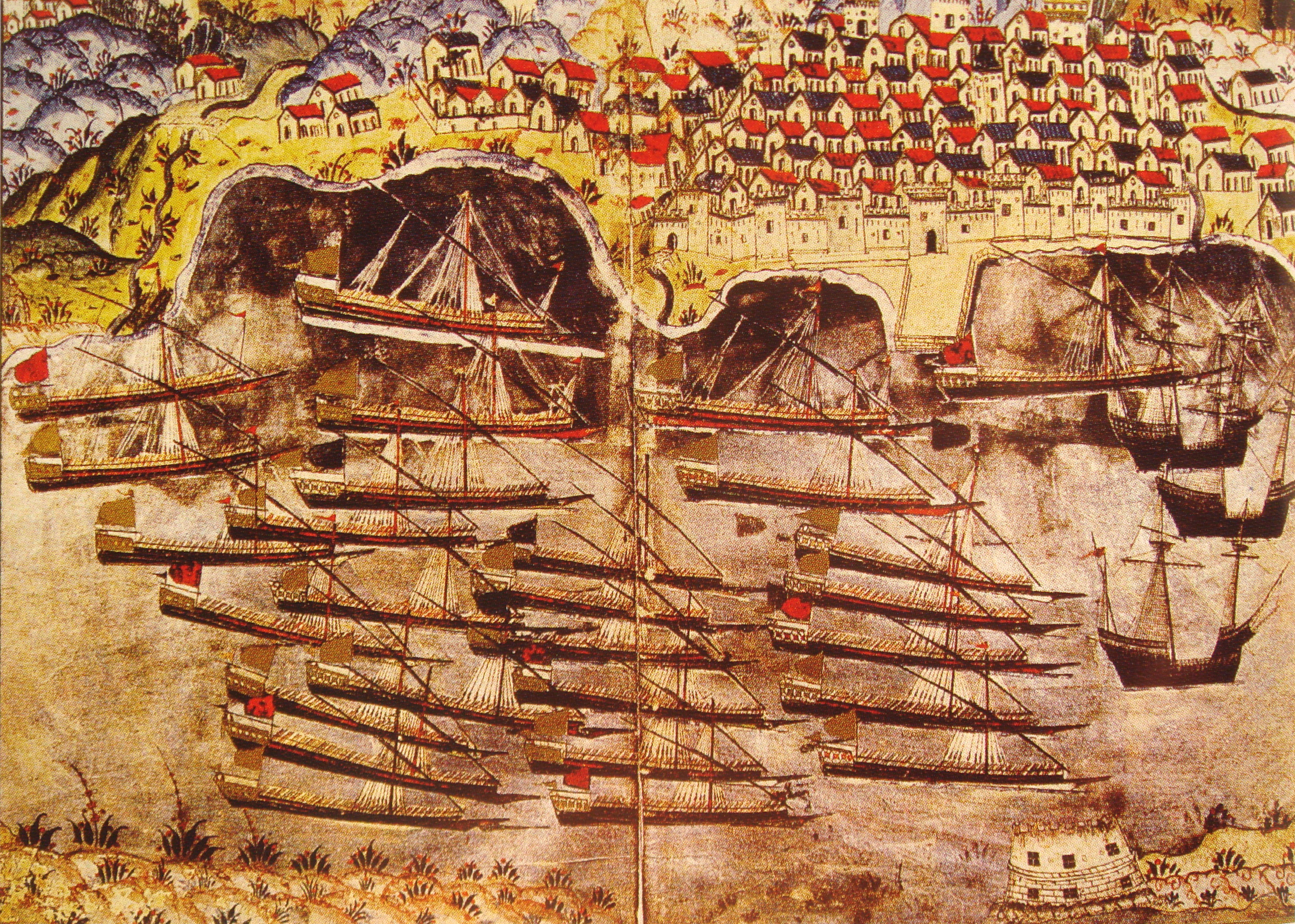
This is actually Barbarossa's Ottoman fleet off Toulon in 1543, almost 100 years after the siege--but the ocean going galleys were probably the kind used at Belgrade, brought up river from the Black Sea.

This is actually Barbarossa’s Ottoman fleet off Toulon in 1543, almost 100 years after the siege–but the ocean going galleys were probably the kind used at Belgrade, brought up river from the Black Sea.

So–I solved my chronological issues by choosing on chronology that matched the majority of contemporary 15th century accounts–that of Kenneth Setton, the author of the incredible source ‘The Papacy and the Levant’ (without which there would never have been a Tom Swan) a history of the events surrounding the crusades–as seen through the correspondence of the papacy.  Odd–I’m virtually addicted to Setton, but I had not thought to use his chronology on Belgrade… but in the end…

Also interesting that Setton’s work, concentrating on primary sources, is at odds with most of what’s on the internet in some important details.  Some re-writing happened here, friends.  dates changes, the pace changed.  I had wondered why–and how–Hunyadi formed his fleet at Kovin, downstream of Belgrade.  Setton says this happened at Slankamen, upstream of Belgrade, and produced a letter from the Serb Despot, George Branković, as evidence.  As the letter is contemporary and dated…

My riverine ship fight began to fray at the edges.

The issue is not just one of chronology, but of tactics.  Setton’s work makes clear that Hunyadi had moved his ‘banderium’ or private army to the shores of the Danube probably directly across from the fortress, by the 4th of July or thereabouts, while the crusaders rallied at Slankamen or nearby, about 40 kilometers north of Belgrade on the Danube, building and/or collecting a fleet of river boats and barges.  If the Ottoman fleet actually barred the Danube near the mouth of the Sava River, then their northern flank should have rested on the far bank–two contemporary accounts insist that the Ottoman galleys were chained together.

With Setton’s chronology, it would appear that the Christians held the northern bank of the Danube from 4 July–in other words, the whole time the Ottoman fleet was in the river. Why didn’t the crusaders simply bombard the Ottomans from the banks?  Or did the Ottoman army have a fort–and earthwork–built on the far bank, as Prince Eugene did in 1717?

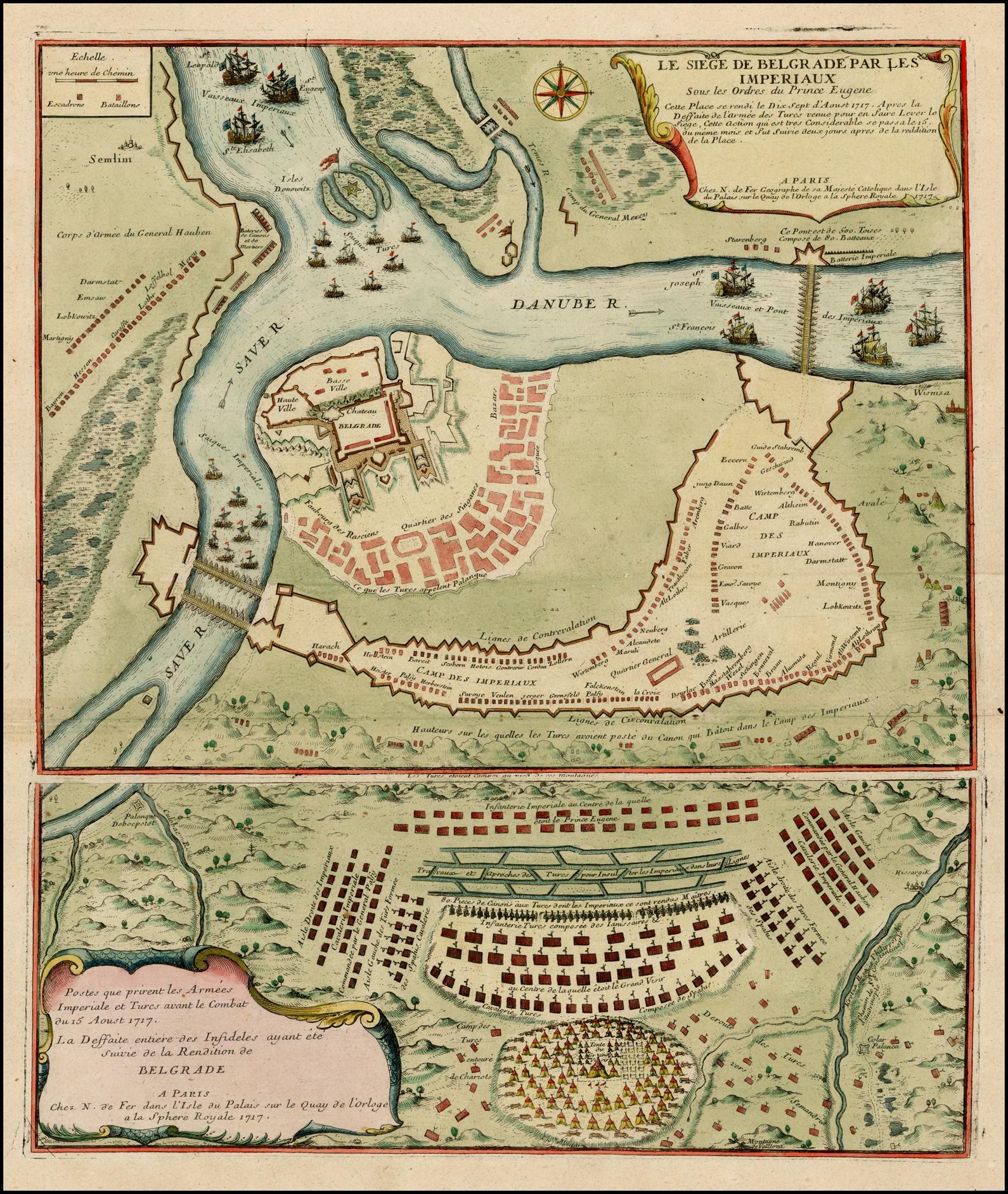
29439

I am not suggesting that it was in the same location–this map of the 1717 siege shows the Austrians laying siege to the Turks, and a Turkish relief force would have to come up the Danube, not down.  But if you look at the four ships in the upper right corner, you’ll see that a small fortress covers the chained Hapsburg galleys. Moving this sort of construction to the island at the mouth of the Sava opposite the fortress would explain how the Turks defended their line of ships, and kept Hunyadi’s gunners from winning the ‘naval battle’ from land batteries.  I chose to go with this–based on my own analysis of the evidence.

A last tidbit.  I don’t read Hungarian or Romanian, and it is entirely possible to me that there are excellent accounts in these languages of the siege.  On the other hand, Setton, who was the kind of thorough scholar I most admire, seems to have examined every source in Latin… and Latin was the official language of Hungary and the Empire.  The remarkable map of the 1717 siege–a map which I found remarkably enlightening in almost every detail–came from the inherent, and was never mentioned in any of my sources, scholarly, military, or other. I found it because Prince Eugene was one of my childhood heroes, and I remembered that he, too, had laid siege to Belgrade. Without the combination of the two–Setton’s painstaking work, and the fortuitous discovery of the map, I would not have had as good a scene.

Anyway–that’s the research process, for a fight scene that fills a few pages, in an immensely complex conflict.  And let me add (as we live in a culturally, if not religiously, charged atmosphere vis-a-vis ISIS et al) that my use of ‘Christians’ and ‘Crusaders’ and ‘Ottomans’ is purely for the sake of simplicity of understanding.  Mehmet II was a modern monarch of a powerful nation-state; most of the gunners serving his superb artillery were Hungarian, Italian, and other ‘Christians.’  Many of the Balkan auxiliaries of the Sultan were–or had been–Christian.  Among the Crusaders, Capistrano made a name for himself before the siege persecuting Jews and homosexuals and proto-protestant ‘heretics’–a thoroughly unpleasant man, an inquisitor very much in the mold of a Warhammer 40K novel.  Most of the ‘crusaders’ appear to have been outraged peasants who couldn’t believe that their ‘lords’ couldn’t be bothered to show up in armour and save them.  Most of the fighting, on the other hand, may have been done by Hunyadi’s hardened and un-penitent professional soldiers, themselves mainly Wallachians and in some cases Italian mercenaries..

History is almost never simple, and their really aren’t that many good guys.

Except Tom Swan.

image001

The Red Knight — Writing about Tournaments

Standard

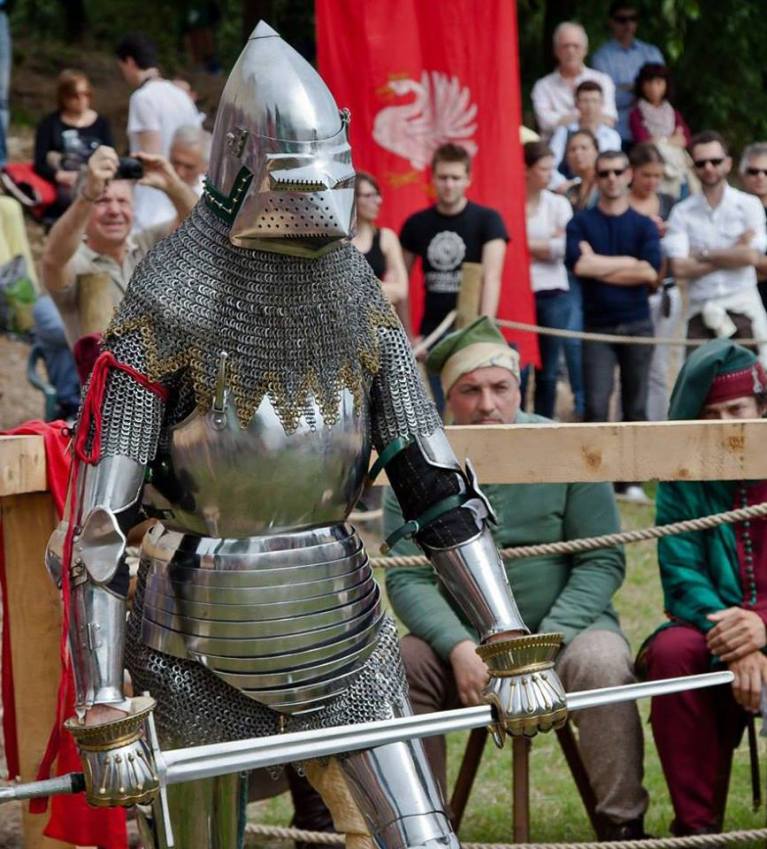
Photo credit Celia Peachum (www.flickr.com/photos/celiapeachum/)

Six months ago I wrapped up the ‘Tournament’ portion of Tournament of Fools (or whatever my publishers will eventually call it.) I’ll try to avoid spoilers, but I thought that it might entertain readers to get an idea of the process.  And, as the publishing date is coming in October 2015, I thought I’d re-blog about this to remind readers that Red Knight III is on the way.

Here’s the writing problem. In the Red Knight series, I am, deliberately, trying to use most of the standard tropes of Arthurian Romance (NB that’s a little different from the standard tropes of Arthurian fantasy, right… ok, pedantic mode off.) One I’ve wanted to play with from the first day of writing this was the wonderful adventure of the knight incognito riding into a tournament to save/rescue the princess or win the prize where no one knows who he is. Frankly, from the Morte D’Artur to Ivanhoe, I LOVE those scenes.

So where’s the problem?

Well… How–and I mean, how, exactly–does the brave knight get to the lists, incognito? Tournaments in the real world were complex affairs–and very dangerous. Kings and princes knew full well that getting several hundred dangerous men in armour together could lead to ill-feeling and violence. Tournaments were tightly controlled by the late-14th century, and since that’s the ‘feel’ of the Traitor son books, I wanted to stick to that. besides–it is a ‘Royal’ Tournament.

I’m including some pictures from the last Tournament I attended, the Torneo del Cigno Bianco in Verona, Italy.

tents and ropes

Here’s a good recreated tournament (foot combat only) outside the walls of a beautiful 14th c. castle. So let’s note a couple of things right away–the crowds of people, and the tents and tent ropes. Tournaments were surrounded by tent ropes. Where else would all the noble knights live? In hotels?

Tournaments also have rules, and men who administer the rules–Marshals and Constables and Heralds. They don’t let just anyone fight. Some of that is about out-dated concepts of birth and nobility–but no one wanted to let an incompetent fighter into the lists, either–not then, and not now. So our knight incognito has two problems–a practical problem of getting through the welter of tent ropes and people, and a ‘game’ problem of getting past the bureaucracy of the tournament. Put another way, could you ‘sneak’ into the heavyweight finals and compete? Even at a relatively low-level MMA fight, there’s security and rules and people to watch the ring…

And then–let’s just ask–does our knight incognito really keep his helmet closed for several hours to avoid recognition? If he has a visor, he doesn’t ever raise it to, say, drink water? If he is wearing a great helm, he’d have to take it off… Listen, I wear armour all the time. The moment I’m not fighting, I want my visor open.

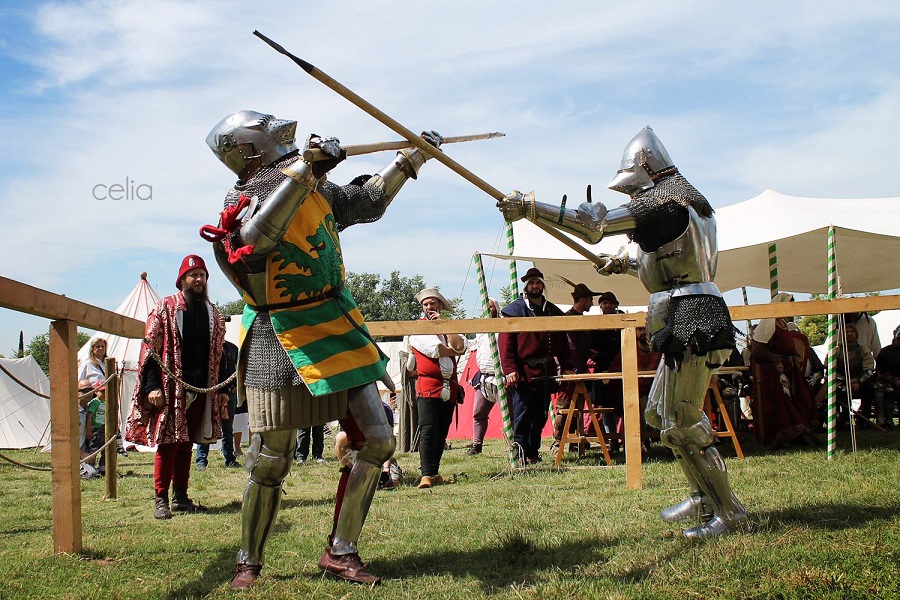
That's me, on the right, fighting with a spear in Italy.

That’s me, on the right, fighting with a spear in Italy.

And just for fun–what about horses? And squires? And pages? No knight–at least, no knight risking his life in an all or nothing joust a l’outrance–wants to ride his destrier for a couple of hours to tire the horse before the moment of combat. So he needs to come on a riding horse, and change, just before he sneaks into the lists… no one will notice him and his entourage… few things sneakier than a mounted knight in armour…

My father–quite an historian himself–has just pointed out to me another problem of getting to the lists–the latrines, or privvies, or the loo…

When covered stands were built along the route of one of the processional performances, toilets for the gentry were built into the stands and easily accessible; the people who stood in the street had to shift for themselves. As Chaucer shows us, tournament theatres were very like dramatic ones, so I’d assume that toilets, at least for the privileged, were built in. Or perhaps there were rows of medieval porta-potties. I assume that the contestants had a special problem once they were in armor – getting through doorways, unfastening, squatting, etc.

You may laugh–but it is a real problem.  Tents, privvies, horse lines and spares, armourers…  thousands of people…

But… if it did happen, how could it have been done?
I’m not telling today. But I enjoyed writing the scene, the details, the planning, all so one character could face another in a climactic fight. And I thought I’d blog about the ‘how.’ This is where my reading of books on this sort of stuff — like Barber, Richard and Barker, Juliet, Tournaments: Jousts, Chivalry and Pageants in the Middle Ages, Boydell (1989) Kaeuper, Richard, The Book of Chivalry of Geoffroi De Charny: Text, Context, and Translation, University of Pennsylvania Press (1996) De Pisan, Christine, The Book of Deeds of Arms and of Chivalry, Penn State University (1999) Lull, Raymond, Book of Knighthood and Chivalry (late 13th c), published by Chivalry Bookshelf (2001) Chivalry and Violence in Medieval Europe (Dick Kaeuper again, because he’s my favorite) (Oxford University Press 2001) and perhaps most important, Maurice Keen’s seminal work, Chivalry (Yale University Press 2005) — was that too many titles? anyway, this is where all the reading links up with all the reenacting, and together, we can explore the details of the how and why of a great tournament–and give the characters some tools to accomplish the author’s mission. Well, and their own.

I confess that in the end, Gabriel and Bad Tom and Amicia–and the Queen and Blanche–ran off with this scene, and not everything went as i expected.

But that’s why it’s fun to write!

Writing about Fighting

Standard

Charette's FiorLeoni's Manciolino 11047112_10153145736917354_343562661_n 11026409_10153145736587354_1777156127_n

I am often asked–often by readers, but occasionally by other writers–about writing fight scenes.  I thought I’d write a sort of mixed book review, ‘sport’ review and writing tutorial.

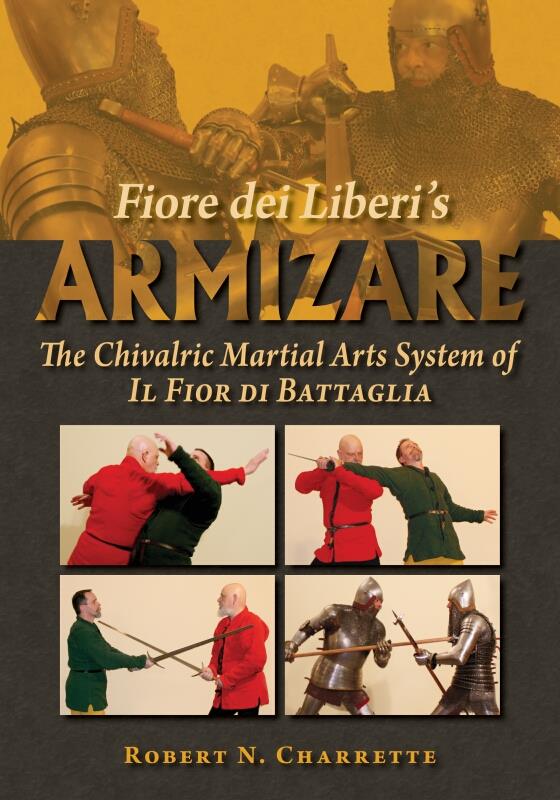
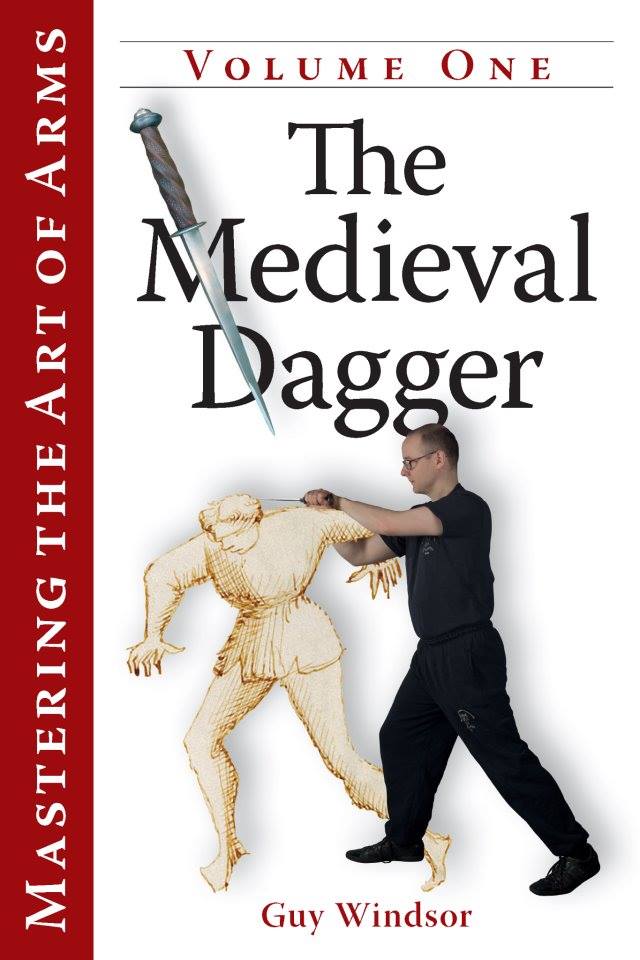
The three books (really, two books and a series) are, in no particular order, Bob Charette’s brilliant Armizare, the Chivalric Martial Arts System of Il Fior di Battiglia; Guy Windsor’s carefully illustrated, easy-to-use series called ‘Mastering the Art of Arms.’ and Tom Leoni’s excellent translation of Manciolino’s Opera Nova, called The Complete Renaissance Swordsman.

Leoni's Manciolino

First, martial arts interest me.  Passionately.  The martial arts that interest me were–and are– deadly–probably far more lethal than those practiced in most store-front dojos–but that’s not my interest at all.  I will never (I hope) face an opponent with lethal intent while wearing 80 pounds of plate armour and wielding a spear.  (BTW, the above was not a cheap shot at other martial arts.  Armizare–the study of fighting in armour–comes to us by the writings and drawings of people who used them to survive on the battlefield.  Most modern martial arts are the ‘sport’ descendents of such arts.  Even, dare I say it, MMA, is a sport–a vicious one, but still–sport.  Want to understand this better?  See my review of ‘Old School’ below.  IMHO all martial arts are equal–equally cultural, equally ‘valid’ and macho doesn’t interest me. I speak as the merest historian.)

I will admit that part of my interest is because fighting–well–fuels my writing.  Even getting injured fuels writing–I read a critic on Amazon the other day who complained that William Gold, one of my characters, is ‘always injured’ and yet ‘keeps fighting.’  Yes, exactly.  Ask any modern professional soldier.  Ask any MMA fighter, or really any athlete at all.  Always injured, always fighting. this little reality is as true in ballet and Olympic kayaking as in combat sports and combat itself.  The sad truth is most modern people never use their bodies to the peak of endurance, so they’ve lost the understanding of what that life was and is like.  Our ‘extreme’ sports are much safer than, say–farming, back before 1960.  Oh, yes.

But, as is so often the case, I digress.  Studying the martial arts of the past–carefully, in an academic way, with some language study–is as much a window on the soul of that era as dance, cooking, or drama.  We have a touching belief. in our modern age, that war and violence is somehow ‘more efficient’ than any other human endeavor–that men about to risk their lives will eschew grace and beauty and ‘cool’ for lethal expediency.  Well, some do, but many do not.  If you doubt me, let me offer you the world of street racing.  🙂  Even gang wars have a sort of sick ‘cool factor’ involved.  And war in the past–where you were ‘performing’ war as well as risking your life–had more of this element than the modern day.  (Although, having been a back-seater in US Navy aviation, I will comment that I think some modern warriors are still hyper-aware that they are performing before their peers.  But enough psycho-babble)

When you read Manciolino, my favorite early 16th century weapons master, or Fiore, to me, the greatest of all the European masters, and the first we know of, you can read into the heart of darkness in an era.  You are there.  When Fiore tells you that a certain strike with the pommel of the sword will make your opponent spit four teeth–when he tells you how to open visor on a helmet, and if that fails, how to spin your opponent to hit him in his–er–unarmoured’ lower regions…that’s more visceral than any amount of fantasy.  He was there.  These things worked.  And they inform the reader at a different level than mere imagination.

Over the last thirty years, a growing community of martial arts nerds–some from the Japanese arts, some self-trained, and some from European fencing or the remarkable sport fighting world called the Society for Creative Anachronism–have dug up dozens–now hundreds–of manuscripts dating from between 1300 and 1800 and translated them to make them accessible to English readers.  This has caused a revolution in the ‘sport’ of so-called ‘Western Martial Arts’ (not my favorite term) or ‘Historical European Martial Arts,’ (also not my favorite term.)

It is now possible, if you avoid the usual martial arts snake-oil salesmen (and women,) to learn pretty much exactly how a knight expected to fight, on horse or foot, with any knightly weapon, in 1385 (like William Gold).  Likewise, it is now possible, in twenty or thirty hours, to get a decent grasp on how a late fifteenth-century gentleman (like Tom Swan) expected to face off bravos in the streets of Rome, or fight with a dagger in the streets of Venice.  Not only can you read the books and take classes, you can buy superb recreations of the weapons, sharp for individual practice or very high level sparring (do NOT try this at home, kids) dull and rebated for experienced practitioners, and hard nylon for new students. Really–it’s amazing.

Oh, you want to look?  OK, these folks make, IMHO, the best practice swords and the best live steel in the business.   There are some smiths in Europe and in America who make better…but they cost three to five times as much.

Albion Swords

Really?  You came back to the blog after looking at Albion?

Right.  Three things about fight scenes–maybe four.

Most importantly, I’d like to say that the very best way to understand a fight scene is by fighting.  Reaching a level of skill where you can even TRY to face multiple opponents is incredibly revealing of the realities of real combat (everything goes to hell).  The old manuals, and the new insights of body mechanics and traditions brought by scholars like Guy WIndsor (Finland), Sean Hayes (Oregon), Greg Mele (Chicago), Bob Charette (Virginia), Jason Smith (Ottawa), Christian Tobler (All over the USA) and Ian Brackley (Toronto) can both confound and illuminate–giving you the kind of detail on which a good scene can turn.  I’ve included their school links in case you want to dash out and start taking classes.  There are many other good schools, in Europe, Australia, and North America.  I’ve listed the ones whose instructors I know.

Anyway…

I have caveats.  There are things martial arts won’t teach you.

First caveat. In real fighting, a large, confidant, athletic person may well defeat a skilled person.  It never works that way in the movies, but frankly, despite lots of mythology, superb coordination and sheer size both matter.  So, while martial arts may give you some hints of how action should work, there’s no revelation like facing  a big, strong kid with good reflexes and no reservations about hitting you.  In novelistic terms, this should happen more often.  In real life, it leads to humility.  Or even injury. 🙂

Second caveat–I’m a fairly skilled swordsman, and when I fight–hard–my mind is a fair imitation of the dark mirror recommended in some Japanese arts.  I’m not ‘thinking’ (in fact, I am thinking very fast, but with little conscious appreciation of what I’m about) as my body and mind read my opponent’s pressure where our edges meet, his stance, her slight tell with her back foot–all this is processed and acted on.  And my life is not even actually in peril.  My point here is–and I have seen real combat, with bullets–there’s a willing suspension of disbelief to a fight scene, in that we pretend that people have conscious thought and memory of events.  In fact, except for a brilliant moment that my opponent or I had, or shared, in a fight–I usually have little memory of the ‘blow by blow’, unless I am the director or referee, and even then…  add terror and confusion, and it is possible that no one has ever remembered any part of a real fight.  Comparing historical accounts of battles would suggest this…

Let me just beat this dead horse a moment.  If you go find a veteran of the recent Afghan war, or Iraq, or Korea or Vietnam–and ask them to describe a combat in which they took direct part–you will learn a great deal about people, and stress, and memory of stress.  The issue as a writer is–how do you communicate that, and, like Jack Nicholson in ‘A Few Good Men’ you might ask if your readers can handle the truth…

My third caveat is for both writers and readers.  The best fight scene ever written (which, in my humble view, was supremely done by Dumas) is only important to the reader if she cares.  Fight scenes without character and motivation are pretty much exactly like sex scenes without character and motivation.  They may titillate briefly, but they fail you as a writer.  Violence has to tell a story, and move plot, and involve character, or its just the author’s wish fulfillment or fantasy of masculinity or what have you.  They don’t matter.  Violence itself is pretty banal, if you get past the shiny swords and the myth.  Most of it is just bad.  Even evil.  Keep that in mind, because in adventure books, it can fascinate, like a wicked snake–or it can dominate, and that’s a different book entirely.

All of the books I listed above are excellent guides to looking at the Medieval fighting arts.  All are readable, and all offer a writer–or a reader–a new insight into the portrayal of violence.  All have attempted to distil complex systems with foreign names and titles into something you can comprehend.

But there’s no substitute for the doing.  So if you really want to know, find a school and put in a little sweat.  Even the training will give you more about which to write–or deepen your reading.

Or wreck it…  I confess that the more I know about combat, the more things I find unreadable.  But that’s for another day, as is my long planned blog on the martial art of commanding men (and women) in the field without modern communications–a beautiful and difficult art of its own.

And of course, if you choose to come to Greece this fall of Pen And Sword 2015… we can talk about it over Mastika.  What’s mastika?

Evil laughter.

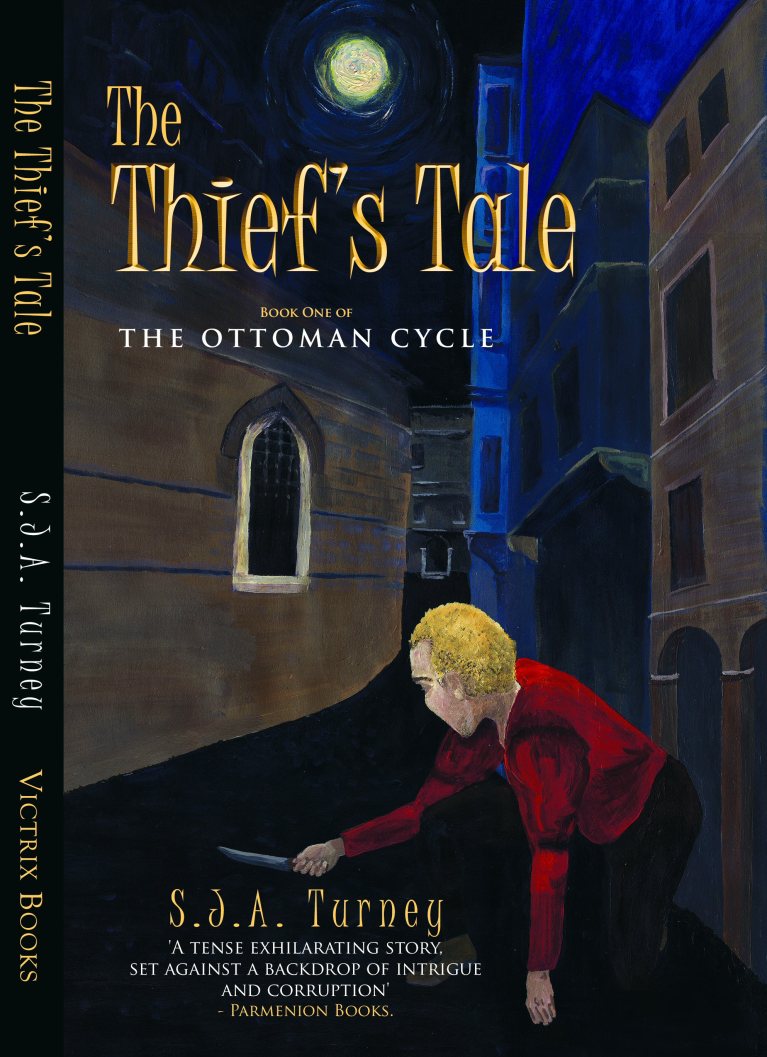
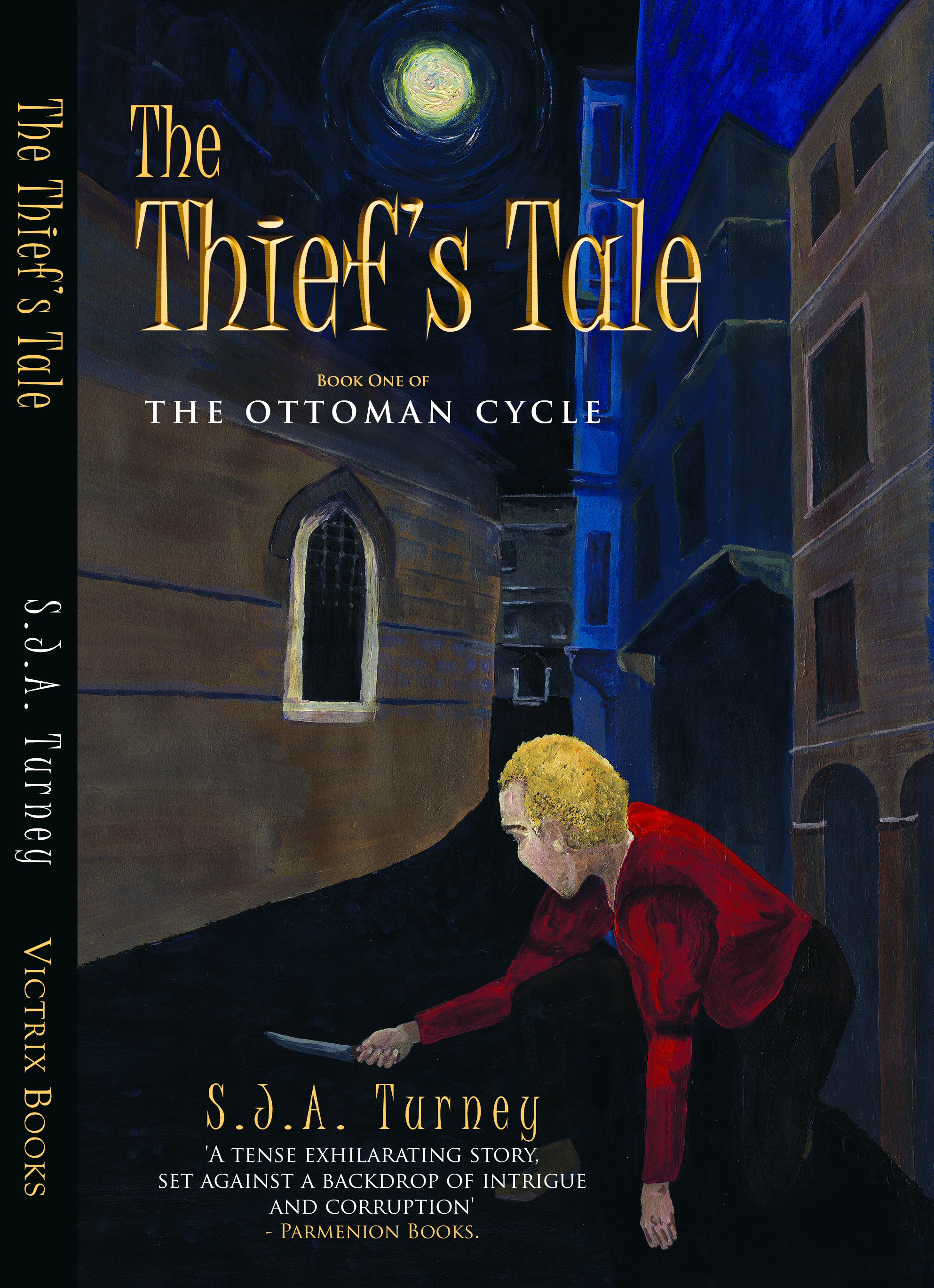
Review of ‘The Thief’s Tale’ by SJA Turney

Standard

Thief's Tale Front Cover-1

Buy It in the UK!

Buy it in the USA

Last year, before the ‘Pen and Sword’ tour even launched, I took a few days in Istanbul with one of my oldest friends, Steve Callahan, and my wife Sarah.  When we met up with Steve, he told me he’d been reading Simon (SJA) Turney’s Ottoman trilogy on the plane.

This caused immediate feelings of guilt. Robin Carter (Parmenion) reccomended ‘Thieves Tale’ when it came out, and I’d liked it, but as the tech-incompetent I truly am, I’d bumbled–something–on my e-reader and lost it.

However, when ‘Pen and Sword 2014’ was done (and we’re doing it again this year for anyone looking for a great vacation with swordplay in early November 2015) I was determined to get back into it.  My e-reader was still unforgiving, so I read the whole thing on my computer screen when I should have been editing Tom Swan (who also spends time in a slightly earlier version of Istanbul).

Wow.  Delightful.  I think that the best thing about this series is the author’s authenticity and his knowledge of places and events.  Side note–next to reenacting (which, oh, by the way, SJA Turney also does), travel is the next best teacher for the historical novel.  Turney knows Istanbul with an intimacy that I admired every page.  All his locations are real, or easily conjured even in the modern street scape of the city.

The Palace of Blacharnae

The Palace of Blacharnae

That’s the Palace of Blacharnae.  I didn’t take the ‘Turney’ tour and I missed some of his locations, but those I did see were fantastic, evocative, and just made his stories all the better.

Oh, and now a word on plot.  I loved the plot. I’ll avoid spoilers and say–this is NOT Military History.  In fact, it’s somewhere between ‘Thriller’ and ‘Mystery’ and it is all based on real events.  Turney also avoids almost all of the tropes that can beset our genre–Turks are not ‘evil’ and Christians are not ‘good.’  The people of Istanbul are just people, and the character–a Christian Greek–goes through a story long realization that life in Ottoman Istanbul could be a lot worse…which I loved.

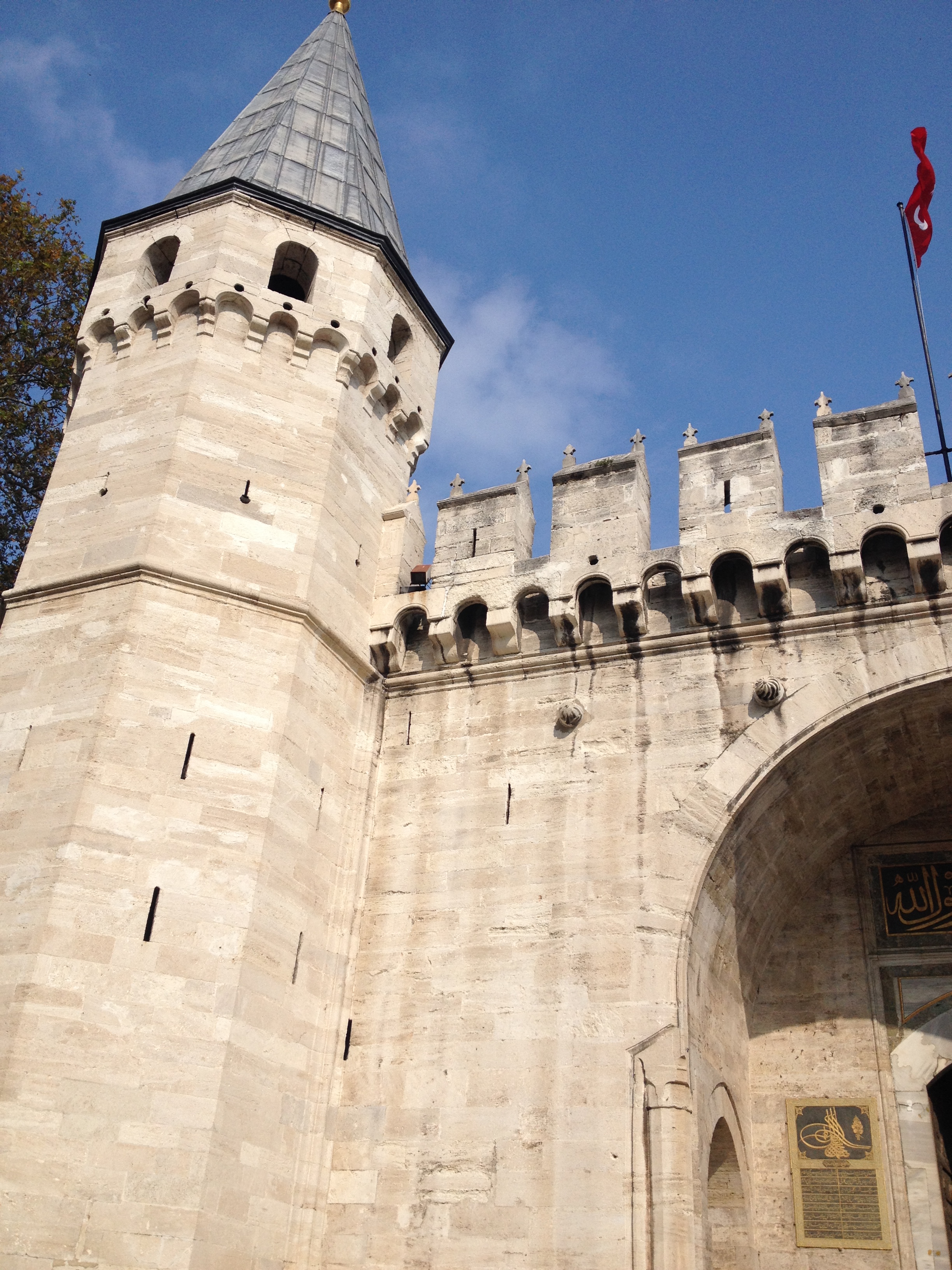
The gate to the Topkapi Palace

The gate to the Topkapi Palace

As an aside, that’s a picture of the gates of the Topkapi Palace, and somehow, they made me think I’d strayed into the French Loire.  It is quite clear when you are in Istanbul that East and West were busy emulating each other as fast as they could.  And for armour and sword buffs–the Topkapi armoury has to be seen to be believed, with more bows and arrows fromt he 15th-17th century than I’ve ever seen elsewhere, as well as some superb swords and targets, and no photos allowed.  Grrrrr.

IMG_0619

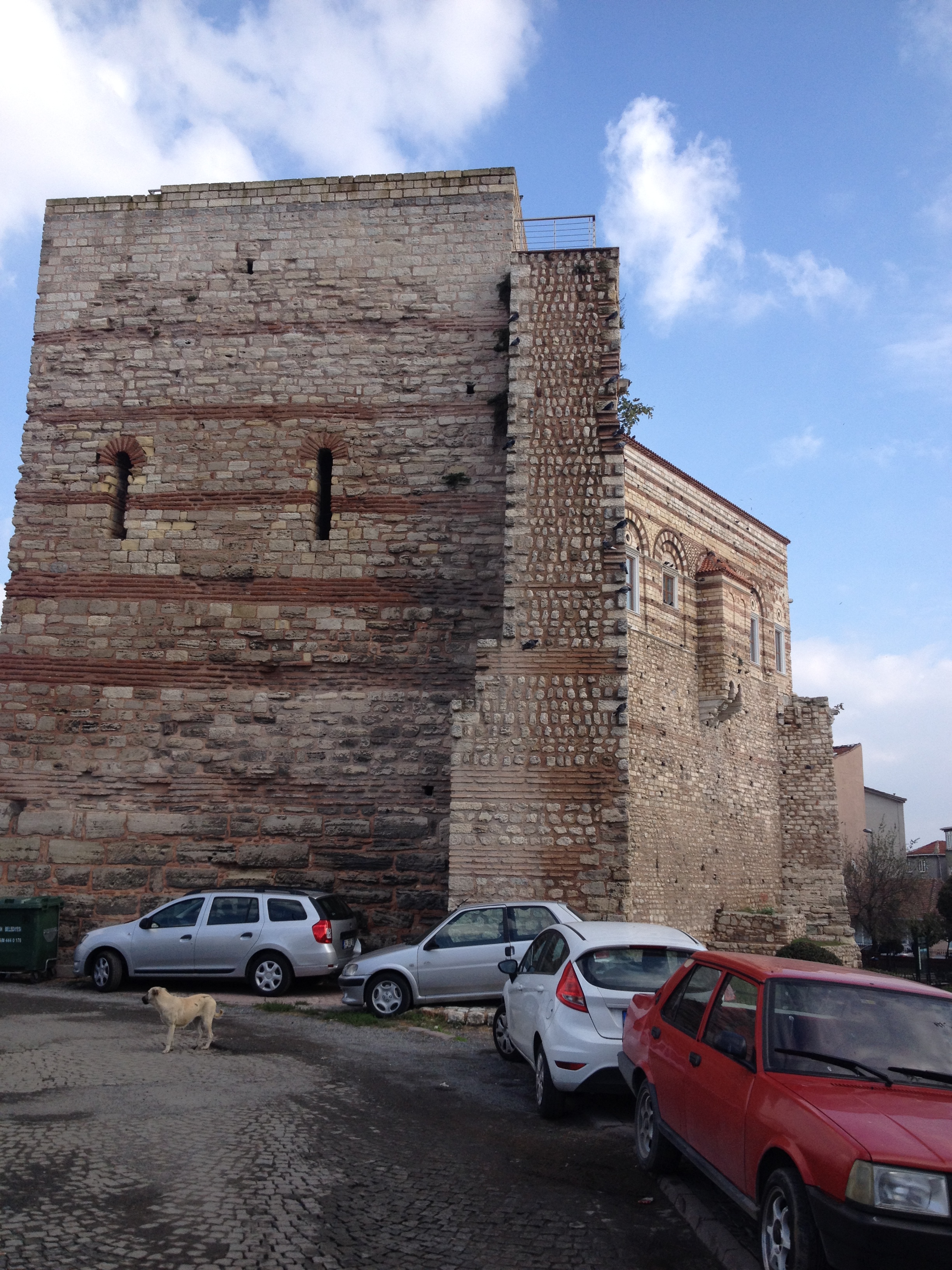
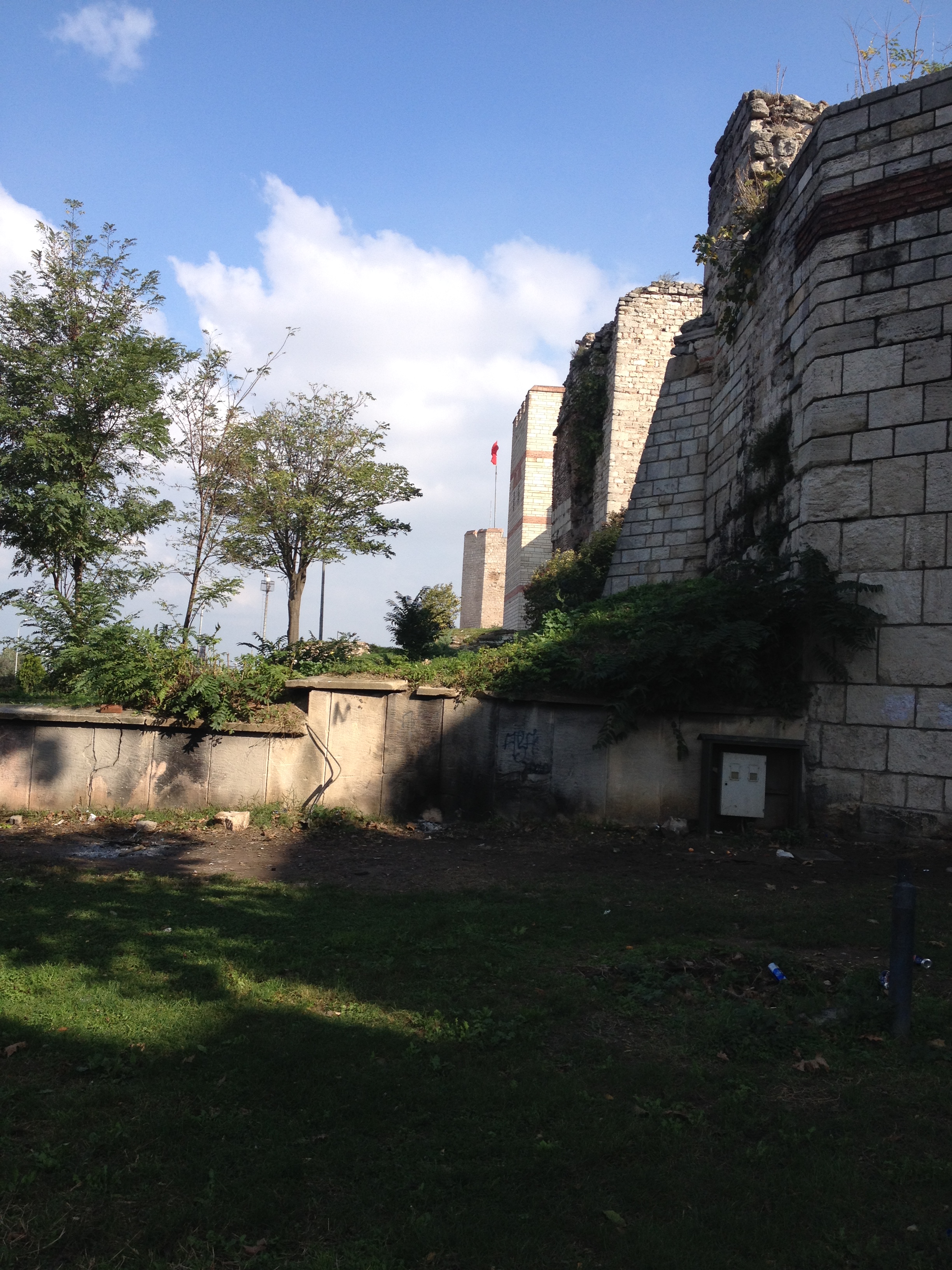
The ancient city walls are from Roman times, and feature several times in the story.  Turney writes about ancient Rome (Marius’s Mules!) and his writing is delightfully ‘aware’ of the Roman past of the city.  The walls themselves are–incredible.

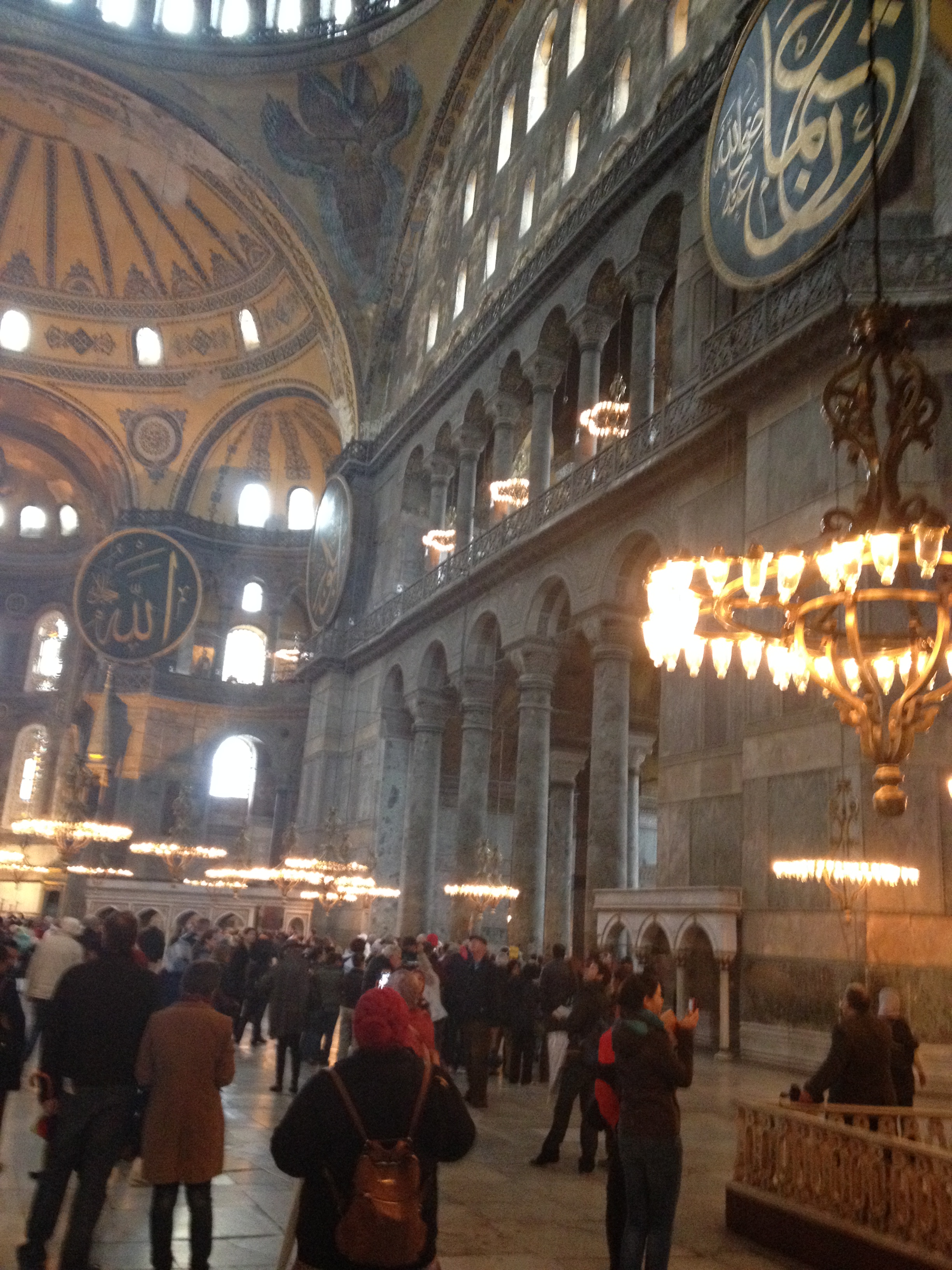
IMG_0406

That’s my best photo of the interior of Hagia Sophia, which I confess is not a scene in ‘Thief’s Tale’ (but it is mentioned) but which blew me away…

Anyway–plot and authenticity.  The Ottoman Cycle is excellent, and you should drop whatever you are doing and buy it.  Oh, and go to Istanbul, too.

And sometimes, I’m wrong

Standard

IMG_1395

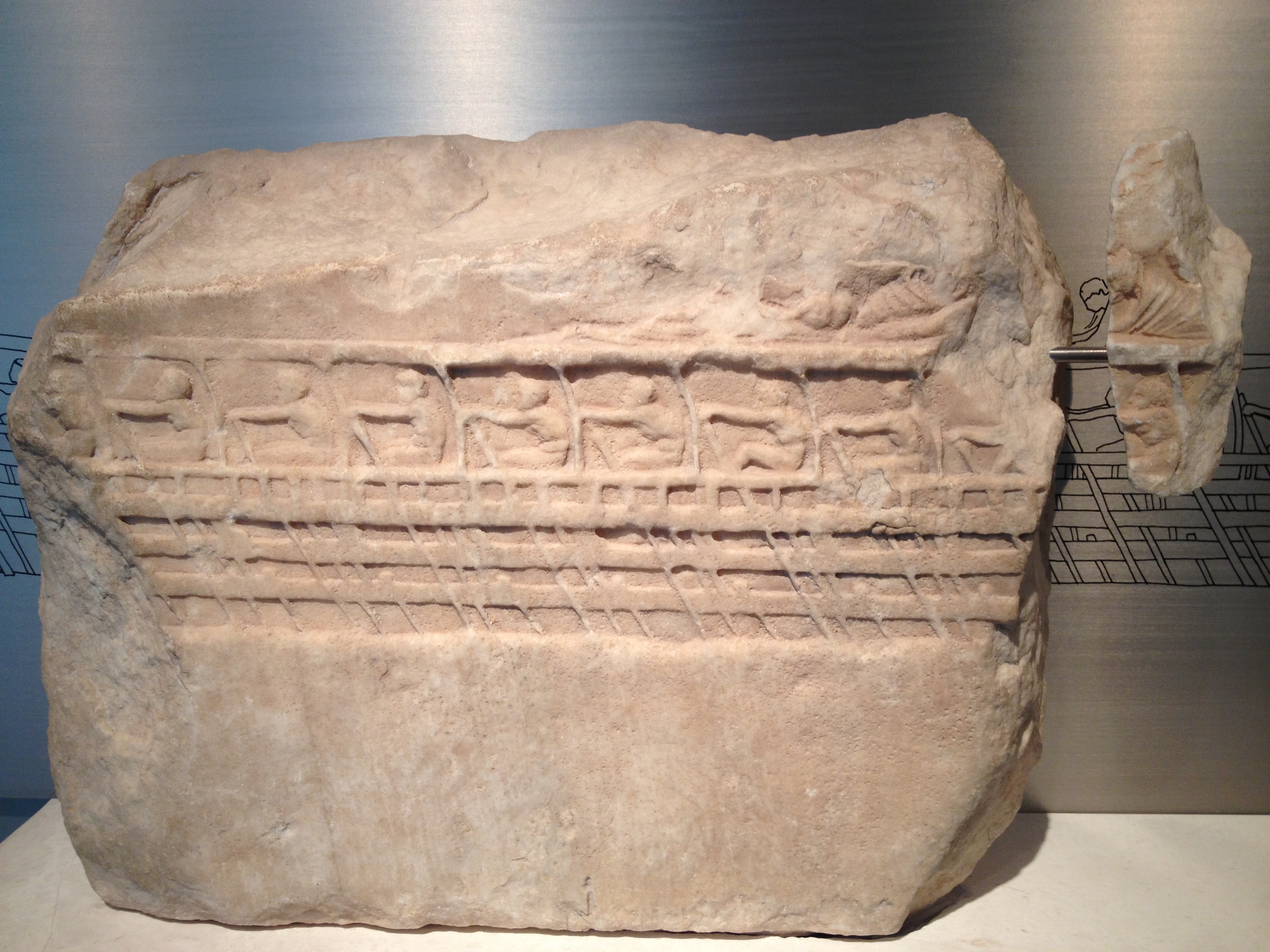
That is a stele (or a fragment thereof) in the New Acropolis Museum in Athens.  I was there last year with my Pen and Sword tour… which of course we’re doing again this year–anyway, I was looking at this stele, as one does, and I suddenly realized that I’d misunderstood the way a trieres (a trireme, or three banked galley) functioned.  Or, more particularly, what it would be like to board such a vessel.  In armour, against people trying to stop you.

Really, Hollywood has it all wrong in almost every era (except Master and Commander, which was beautiful, I felt). The decks of warships rarely match up, and most ships in the age of sail (and even galleys) had a pronounced ‘tumble home’ or back angle, so that the ship at the waterline is often wider than the ship at the ‘top’.  This makes boarding quite exciting–there’s a good few feet of nothing, a lot of angry men facing you down, and oh, by the way, if you miss your leap, you drown–but maybe you get ground to bloody paste between the hulls first.

OK, but back in galley combat…

I guess that I assumed that the trireme had a solid hull with oar ports.  In fact, I know what I was influenced by–I was influenced by reenacting.  I’ve rowed a 16 oar gondola reproduced for the Lake Champlain Maritime Museum, and I’ve rowed quite a bit in a slightly smaller war-boat, an armed bateau of 12 oars.  I think that I assumed–in some not-connecting-the-dots portion of my mind–that undecked (aphract, to those who read books about these things) triremes had–well–slab sides of heavy wood.

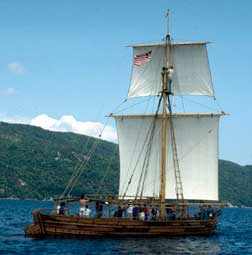
USS Philidelphia under sail.  Philadelphia is a recreated 1776 three gun rowed gondola with a square rigged mast, built for service on the Great Lakes of North America.

USS Philadelphia under sail. Philadelphia is a recreated 1776 three gun rowed gondola with a square rigged mast, built for service on the Great Lakes of North America.

I was wrong.  What is worse, I knew in a way that I was wrong all along–I understood the naval architecture of the trireme, and I’ve seen the Olympias.

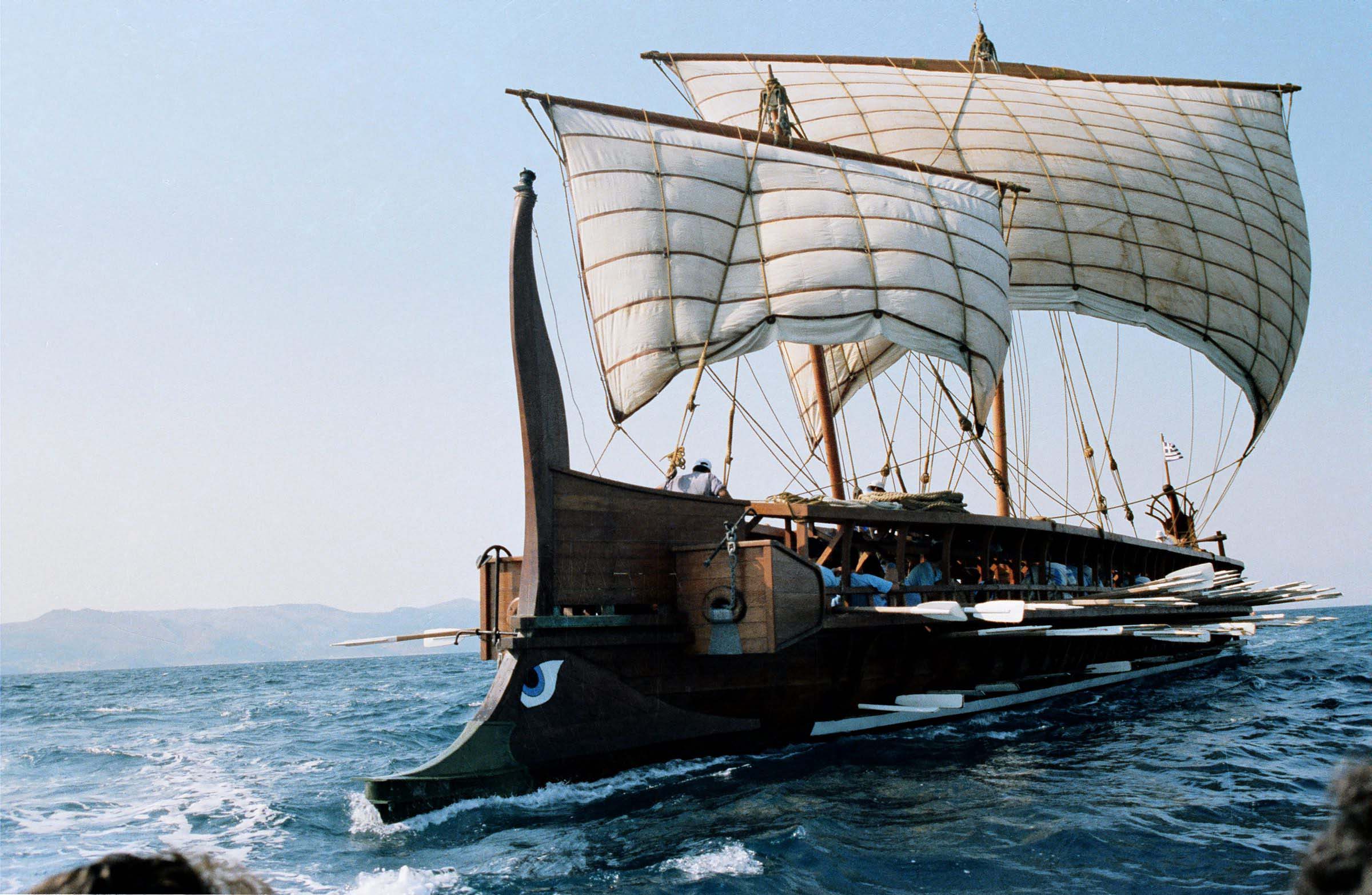
Olympias

There she is–a real trieres, oars in and under sail.  Look carefully, and you can see the rowing frames, and you can see the rowers.  Now, see the problem for the boarders?

Olympias is built, I believe, as a ‘cataphract’ trireme, or fully top decked.  And there is some argument about whether Athenian triremes of the Persian wars were Aphract or Cataphract.  Aphract is faster and more maneuverable and much less stable.  Cataphract is heavier and carries more marines.

I have just finished Long War Book V, called ‘The Wooden Walls’ about the battle of Salamis.  Boarding combat has now changed–open rowing frames are now a problem to be faced.  I was wrong, and I can’t go back and fix my slap-sided ships in the last five novels.

Oh, and I apparently had the process of anchoring wrong, too.  Luckily, a fantastic new book called ‘Seagoing Ships and Seamanship in the Bronze Age Levant’ set me straight, and if you like all this stuff, you need a copy.

Anyway… it is odd that reenacting and historical recreation–which usually helps me so much with authentic detail, had in this case not just put me on the wrong track, but betrayed me.  Or perhaps not so odd–I should, in fact, have known better than to trust the experience of a 1776 galley as being relevant to 480 BCE.  Some things were relevant–the experience of rowing a long distance, or rapidly turning a big, heavy ship, I suspect.  But the boarding…

Anyway, back to study and more writing.  Its time for more Tom Swan in the next few weeks.  Oh, and book reviews.

Book Review – ‘Old School’ Essays on Japanese Martial Traditions’ by Ellis Amdur

Standard

11002394_10153302375863352_1155931733_o

Book Review – ‘Old School’ Essays on Japanese Martial Traditions’ by Ellis Amdur

I am not a serious Japanese-school martial artist. I have played with, and enjoyed, Kendo, Iado, and Aikido, but I suspect that a lifetime of study in the world of Classics and the European Middle Ages—and reenacting the same—has walled me off from my ability to fall in love with Japan. To me, the martial arts of Medieval Italy are more—real. Hard to explain, and possibly for another blog about war and culture.
That said, though, this book, ‘Old School’ is one of the best books on the traditions of martial arts —  and how time changes, erodes, and enhances them — ever written. In fact, you might even say it stands alone as an attempt to bring modern scholarship and even philosophy (like Huserl’s notions of the study of history) to bear on the heavily mythologized, incredibly nuanced, hothouse world of Japanese combat arts and their evolution—or devolution—into stylized sport fencing and manicured kata—and even that statement is a distortion of the complex arguments in the book.
There are many layers to this book; a history of Japanese combat arts, an historiography of the same arts, a de-mystification of those arts, an examination of the psychology of those arts and of war, struggle, and violence itself—and I detected more layers that, were I a higher level practitioner, would probably have deeper meaning to me. (The title—Old School—is a literal translation of the term ‘Koryu’ or so I assume.) I confess that at times the recitation of the lineage of a particular faction of an old ryu, or school, complete with black and white nineteenth century photos of surprisingly small and un-military looking men, often read to me like the dullest parts of the bible or the Silmarillion—occasionally, having made his point, the author beats the dead horse repeatedly. Despite which, this book strikes me as a must read for any practitioner of any martial art, Japanese, Okinawan, Brazilian or Italian or German, because it does, in horrifying exactness, trace the path to loss and decadence that every martial art begins the day its members stop using it to live or die and which seems to end across all cultures in a sort of petrified ritual dance that would not save the dancer from any martial encounter. I had to discover for myself that the magnificent game of Kendo had nothing whatsoever to do, even historiographically, with the way Samurai fought with swords—I would have appreciated this book all the more when I was twenty! And as a man who loves Japanese Martial Arts, he is yet able to face the historical truth—that the Samurai of the late 17th century and later were ill-equipped for any martial encounter, even with peasants—that the impact of the West in the mid-nineteenth century led to a national revulsion with ‘failed’ or even ‘fake’ cultural artifacts.  The samurai weren’t super.  In many cases, they weren’t even average.
And yet—perhaps the best thing about the book is the author’s deep and evident respect for the entire edifice of Japanese Martial Arts—his interest in how close they came to extinction like their European cousins, and his appreciation that changes are not always bad, and that martial arts, like other arts, are cultural artifacts and not really killing systems right from their inception. Ellis Amdur’s book is brilliant. It has a great deal to tell us, and everyone who loves these arts, east or west, old school or new school, should have a copy.

Buy it here…  http://www.freelanceacademypress.com/oldschool-2.aspx

Book Review: Henchmen of Ares: Warriors and Warfare in Early Greece By Josho Brouwers

Standard

This website was created to support my 2014 tour of Greece with fans and friends (now, all friends, and hopefully still fans) and we’re already working on another round in November of 2015.  So this is the right place–you’ll see updates on the sites and writings–and the Martial Arts–over the next few months.  But I’ve also decided to start writing some book reviews.  Here are my ground rules:  the book has to deserve 5 stars to get reviewed, and it has to be on Greece, Martial Arts, or both (pen and sword, you see).

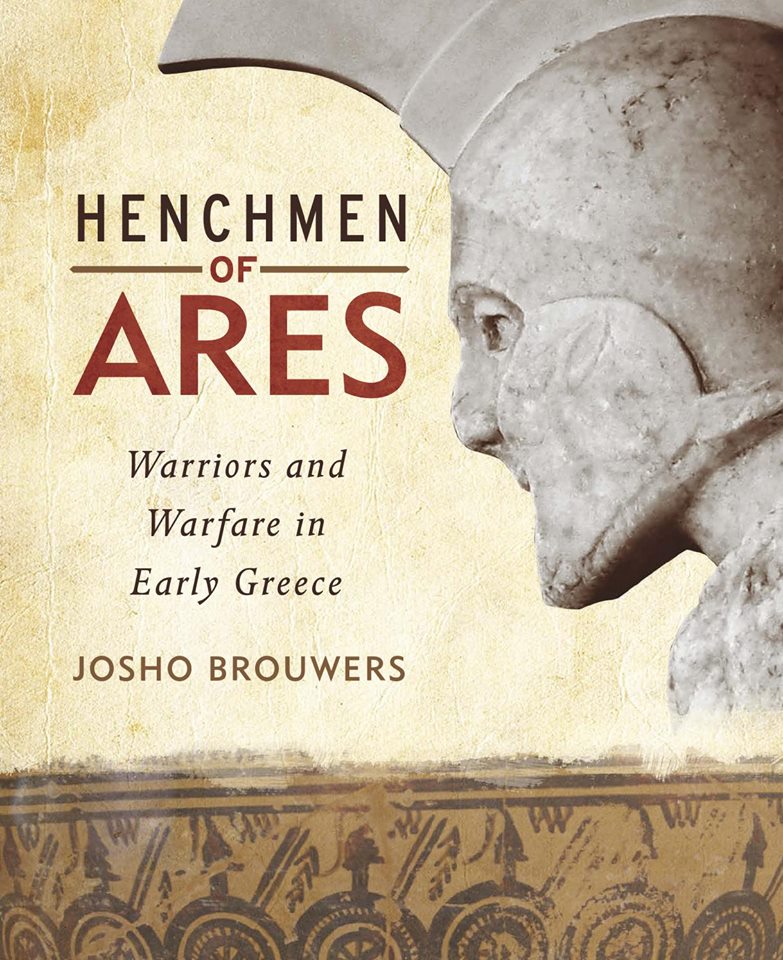
My first review will cover a book which touches on both Greece and Martial arts–Josho Brouwer’s ‘Henchmen of Ares.

10966524_424901104339001_1565416913_n

I am not a professional historian. That is, I sometimes write straight history and sometimes people pay me to lecture on certain topics—mostly in the late eighteenth century, in fact—but I write historical novels set in Archaic and Classical Greece and I think I qualify as ‘widely read’ on the subject of ‘Warriors and Warfare.’
I also run a large reenactment group that has ‘490 BCE Greece’ as one of its three time periods. (The other two are 1777 Loyalists in the American Revolution and 1385 English and French Mercenaries in Italy. Just by the way.) Since we started working on the late Archaic period back in 2008, relative newcomers have asked me to name one book that they could read to ‘get into the topic’ of hoplite warfare and Archaic Greece.
I’m pretty sure that this is the book. And it fills an important niche in the literature, because, since Connolly’s ‘Greece and Rome at War’, there hasn’t been a survey of the period that was, on the one hand, scholarly and carefully researched, and on the other hand, included period equipment and vase paintings as well as modern illustrations to illuminate the reader as to what things might have looked like.
‘Henchmen of Ares’ is, I think, the best comprehensive treatment of the origins of hoplite warfare since the ‘Heretics vs Orthodox’ debate began in the 1980s. Brouwers is a member of the ‘Heretic’ camp and so am I, but he deals with the evidence in an even-handed way, and his Bibliographic Notes are masterful—in fact, they are the core, or even the spine, of the whole argument, and the reader who looks at the pretty pictures and reads the chapters but skips the ‘notes’ is missing what I see as the very best of the book.
There are places where I disagree with Brouwers on everything from chronology to society, but that in no way detracted from my enjoyment of the overall view. If you wish to read one book as a companion to my ‘Long War’ books, or Pressfield’s ‘Gates of Fire’, or if you plan to come and reenact at Marathon, I recommend that you read this, and then start reading your way through his bibliography.
In my reenactment group, my friend Nicolas Cioran calls reenacting the Archaic ‘The Journey into Complete Darkness’ not least because there is so much dissent among scholars. Brouwers has, at the very least, come with a torch.

Perhaps some exercise?

Standard

I’m wondering if the folks coming on the Pen and Sword tour would be interested in practicing some historical swordsmanship while we’re in Greece.  My notion is to explore Italian Longsword or single sword, and I’d teach some basic forms, all the guards, and bring equipment to allow some (very limited and safe) sparring.


Martial Arts

I’ll be doing my forms and guards every day, anyway.  Care to join in?  I daresay that in 9 days, I can teach the rudiments of the art to everyone.  What you’d need to do is tell me yes, and then (I’d post more) buy a practice sword (about $75) and have it shipped to Aliki (another $40).  And yes, you could take it home with you….  please contact me at cgc.sjw@sympatico.ca and tell me what you think, or go to the Agora at Hippeis,com.  Thanks!  See you all soon!